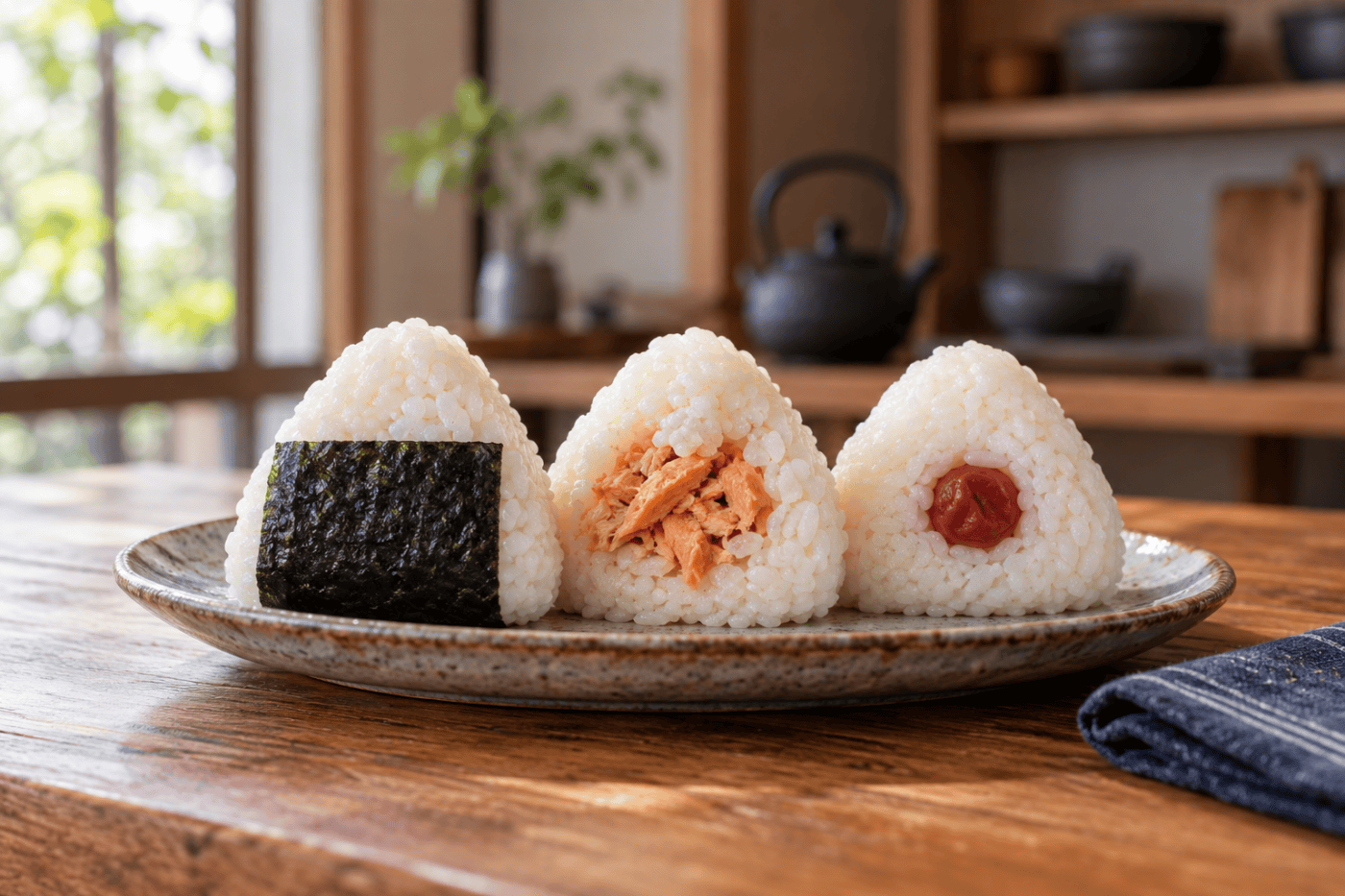
Onigiri are one of Japan’s simplest and most comforting foods.
They are made by shaping cooked rice into a triangle, ball or cylinder, so they are easy to carry and eat without cutlery. Some are wrapped in nori seaweed, while others are seasoned, grilled or filled with ingredients such as salmon, tuna mayonnaise and pickled plum.
And actually, you can find onigiri almost everywhere in Japan—from convenience stores and supermarkets to train stations and specialist rice ball shops.
They may look simple, but onigiri are much more than just a quick snack.
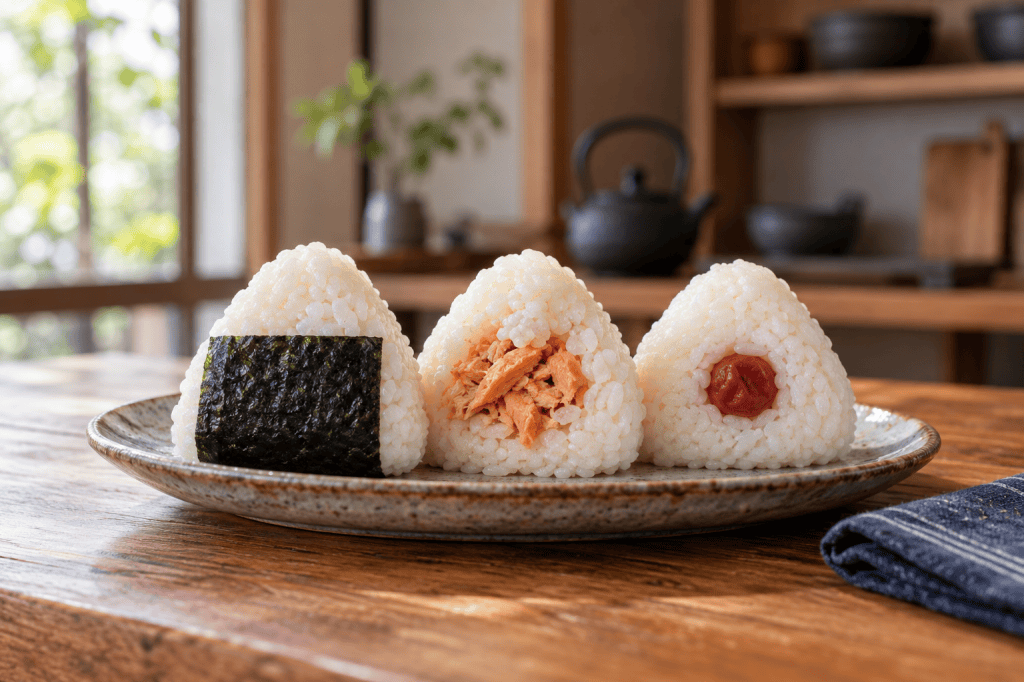
Classic Japanese onigiri with nori, salmon and umeboshi.
What Are Onigiri to Japanese People?
For many Japanese people, onigiri are closely connected to everyday life.
Parents often put them in children’s lunch boxes, families take them on picnics and travelers buy them for train journeys. They can be eaten for breakfast, lunch or as a quick snack.
Onigiri are also associated with homemade food. Because they are traditionally shaped by hand, they can carry a feeling of care and comfort.
Personally, I think onigiri play a similar role to sandwiches in many other countries. They are simple, portable, affordable and available with many different fillings.
But onigiri are not sushi, even though the two are sometimes confused.
Sushi rice is usually seasoned with vinegar, sugar and salt, while onigiri are normally made with plain Japanese rice and a little salt.
A Short History of Onigiri
Rice balls have been eaten in Japan for centuries.
Before refrigerators and modern food packaging, shaping cooked rice into a compact form made it easier to carry. Salted or preserved ingredients placed inside the rice also helped it last longer.
During the Heian period, rice formed into oval shapes was known as tonjiki. It was served at special occasions and could be carried and eaten by hand.
In later centuries, warriors and travelers took rice balls with them because they were convenient and filling. During the Edo period, nori seaweed became more widely available and wrapping rice balls in nori became increasingly common.
Onigiri continued to be a familiar homemade food, especially in lunch boxes and meals prepared for travel.
In modern Japan, convenience stores have turned onigiri into one of the country’s most popular grab-and-go foods.
Actually, the packaging itself is rather clever. It keeps the crispy nori separate from the moist rice until you open it, so the seaweed stays crisp.

Rice balls have been carried by Japanese travelers for centuries as a simple and filling meal.
Why Are Onigiri Usually Triangular?
Onigiri can be round, oval or cylindrical, but the triangle is probably the most familiar shape.
A triangular onigiri is easy to hold, arrange in a lunch box and display on a store shelf. The shape also makes it convenient to wrap part of the rice with a rectangular sheet of nori.
But, well, onigiri do not always have to be triangular.
The shape can vary by family and region. Homemade onigiri do not need to be perfect—slightly uneven rice balls are often part of their charm.
Popular Onigiri Fillings
One of the best things about onigiri is the variety of fillings. Here are some popular types to try in Japan.
Salmon
Grilled and salted salmon is a classic choice. It has a rich, savory flavor and is easy to find in convenience stores.
Tuna Mayonnaise
Tuna mixed with Japanese mayonnaise is creamy, mild and especially popular with children and younger people.
Actually, tuna mayonnaise is one of the first varieties I would personally recommend to someone trying onigiri for the first time. The flavor is familiar, gentle and easy to enjoy.
Umeboshi
Umeboshi is a salted pickled plum with a strong sour and salty taste.
It is one of the most traditional fillings and pairs well with plain rice.
But be prepared—the flavor can be surprisingly intense if you have never tried it before.
Kombu
Kombu seaweed is simmered in a sweet and savory soy-based sauce. It has a deep umami flavor and a slightly chewy texture.
It has a deep umami flavor and a slightly chewy texture. It may not look as colorful as some other fillings, but it is a quiet classic.
Mentaiko
Mentaiko is seasoned pollock roe. It is salty and may be slightly spicy.
You may also see tarako, a milder salted version of the roe.
Personally, I think mentaiko is a good choice when you want something with a little more flavor without choosing anything too unusual.
Okaka
Okaka is made from dried bonito flakes seasoned with soy sauce.
It has a smoky, savory flavor and is another traditional filling.
Takana
Takana is pickled mustard greens, often chopped and seasoned. It has a salty, slightly tangy flavor and is particularly associated with Kyushu.
You may not see it in every convenience store, but it is worth trying if you find it
Ikura
Ikura is salmon roe. Its rich, salty flavor makes it feel a little more luxurious than many everyday fillings.
Tenmusu
Tenmusu is a small rice ball containing shrimp tempura. It is a specialty associated with Nagoya and the surrounding region.
Yaki Onigiri
Yaki onigiri are grilled rice balls, usually brushed with soy sauce or miso.
Grilling creates a crispy, fragrant outside while the rice stays soft inside.
They are a little different from the filled onigiri you usually see in convenience stores, but they are especially satisfying when served hot.
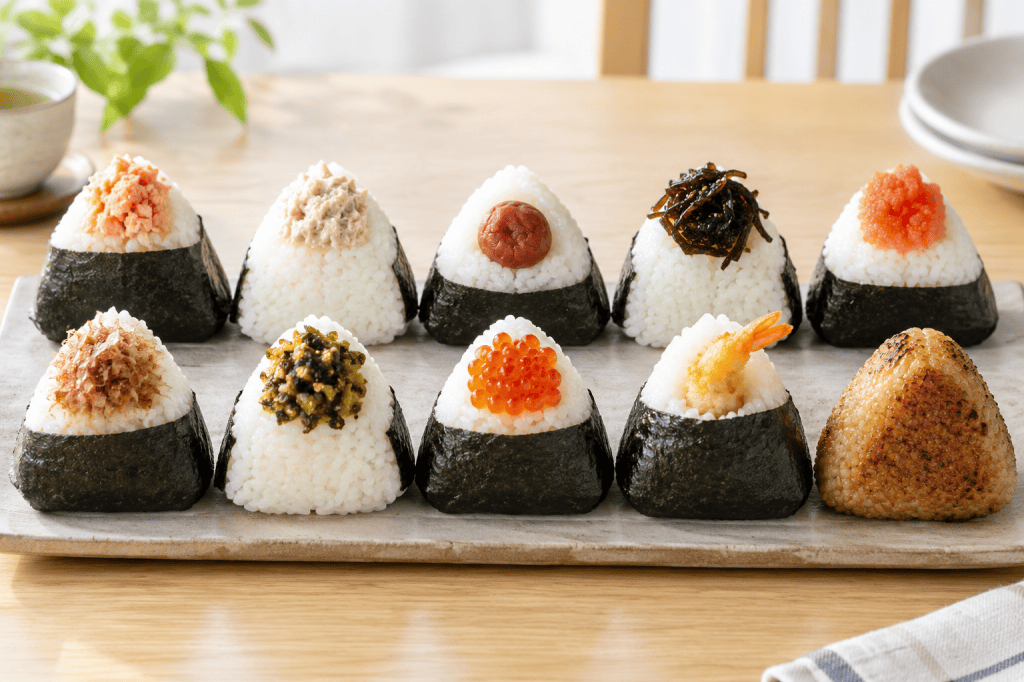
Popular onigiri varieties include salmon, tuna mayonnaise, umeboshi, kombu, mentaiko and yaki onigiri.
How to Open Convenience Store Onigiri
Convenience store onigiri often comes in special packaging designed to keep the nori dry and crispy.
Look for the numbers printed on the wrapper:
- Pull the center strip from the top and continue around the package.
- Pull away one side of the wrapper.
- Remove the other side.
The sheet of nori will fold around the rice as the plastic is removed.
The important thing is to follow the numbers in order. Try not to pull all the plastic off at once, or the nori may not wrap around the rice properly.
Well, even Japanese people occasionally make a mess of it, so do not worry if it does not work perfectly the first time.
Where Can You Buy Onigiri in Japan?
Onigiri are available from:
- Convenience stores
- Supermarkets
- Train station shops
- Department store food halls
- Specialist onigiri shops
Convenience store onigiri usually offer good value and a wide selection. Specialist shops may prepare the rice balls freshly and offer regional or seasonal fillings.
Prices vary depending on the shop and ingredients, but simple onigiri are generally an affordable choice for travelers.
Which Onigiri Should You Try First?
If you are unsure which one to choose:
- Try salmon for a classic savory flavor.
- Try tuna mayonnaise for something mild and creamy.
- Try umeboshi for a traditional sour and salty taste.
- Try kombu if you enjoy sweet and savory flavors.
- Try mentaiko for something salty and slightly spicy.
- Try yaki onigiri if you prefer a crispy grilled outside.
Personally, I would probably recommend salmon or tuna mayonnaise for your first onigiri. But if you want a more traditional Japanese flavor, umeboshi is certainly memorable.
Onigiri may look simple, but they are an important part of Japanese food culture. In their own quiet way, they reflect the value placed on rice, seasonality, convenience and homemade comfort.
So, while you are in Japan, do not try only one.
Save this guide for your Japan trip and try a different onigiri filling each day! 🇯🇵
 Japan Travel Note
Leave a comment