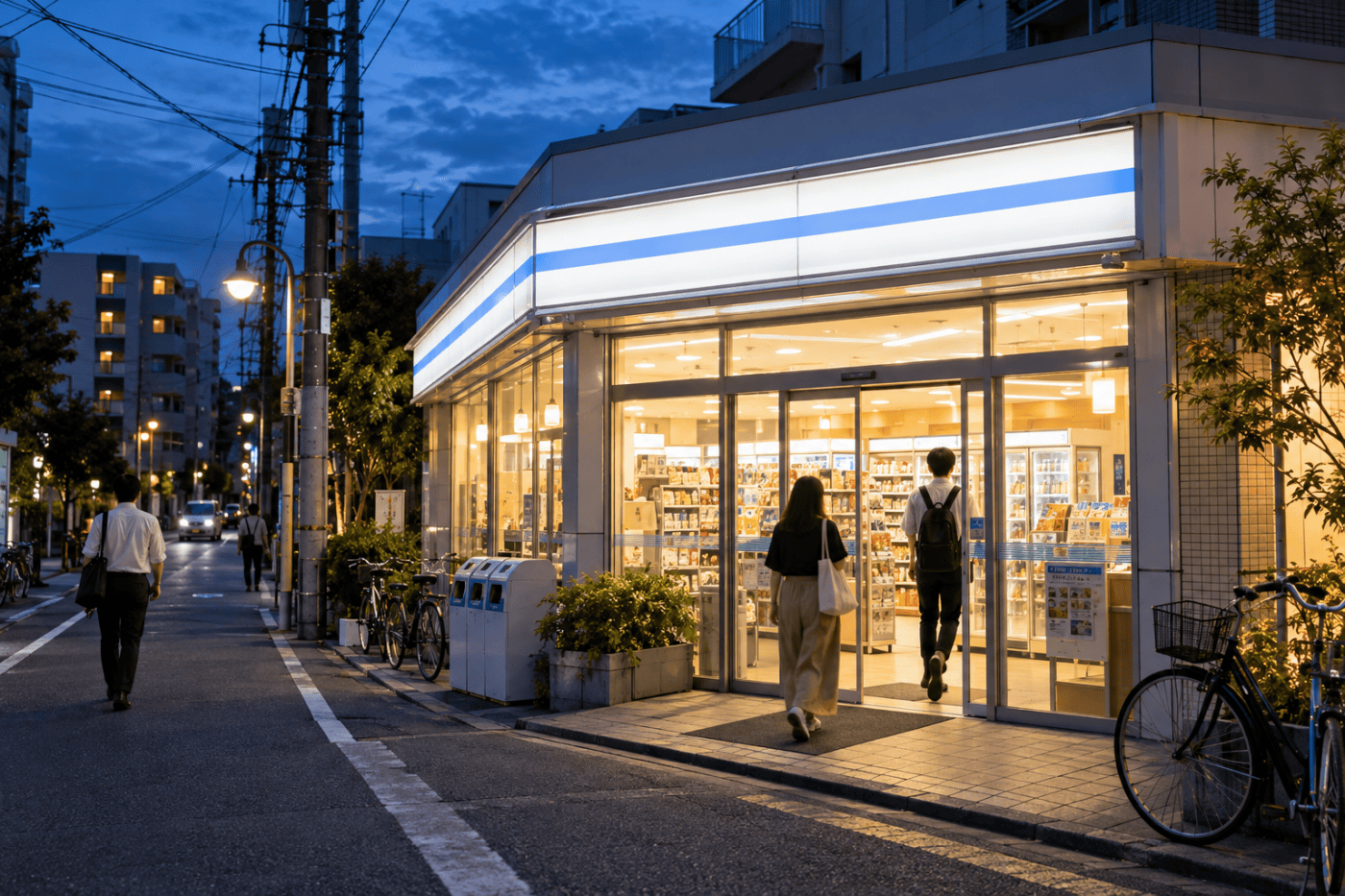
Japanese convenience stores are often called konbini.
At first, they may look like ordinary small shops where you can buy drinks and snacks. But step inside and you will discover something much more useful.
Japanese konbini sell freshly prepared food, everyday essentials and travel necessities. Many also offer ATMs, printers, ticket services, parcel delivery and bill payment.
For Japanese people, a konbini is not simply a shop. It is a familiar and dependable part of everyday life.
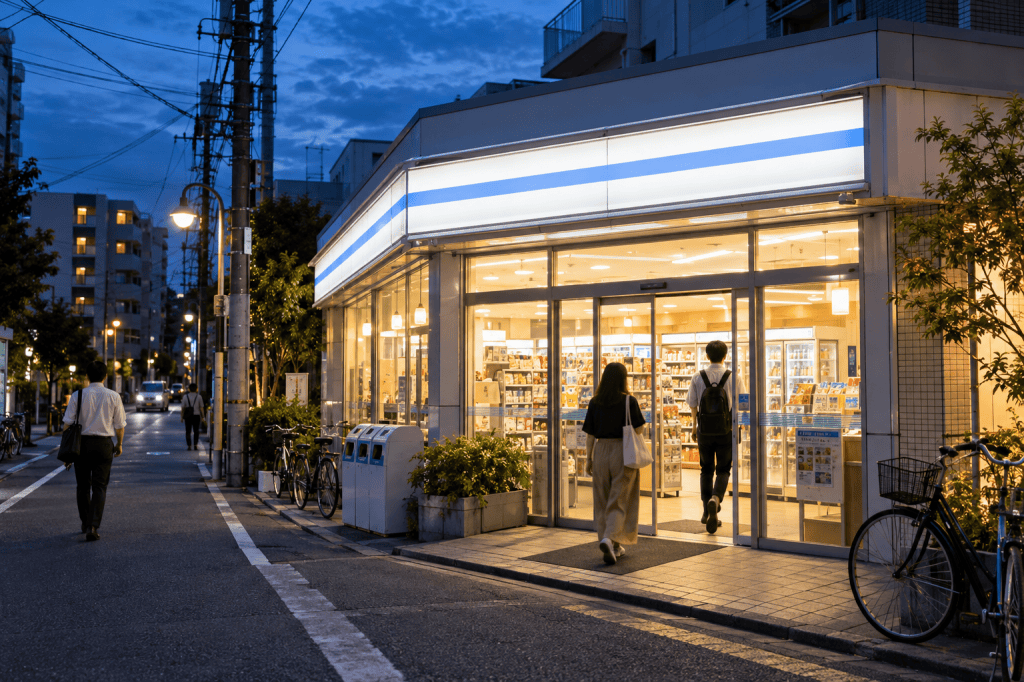
Japanese convenience stores are a familiar and reassuring sight in neighborhoods across Japan.
What Is a Konbini?
The word konbini comes from the English phrase “convenience store.”
Japanese convenience stores are usually compact, brightly lit and carefully organized. Many locations are open 24 hours, although opening times can vary.
The major chains include 7-Eleven, FamilyMart and Lawson, as well as several smaller and regional chains.
Inside a typical konbini, you may find:
- Onigiri rice balls
- Bento lunch boxes
- Sandwiches
- Noodles and salads
- Hot snacks
- Bread and desserts
- Coffee and cold drinks
- Toiletries
- Basic medicine and health products
- Umbrellas
- Chargers and batteries
- Stationery and travel essentials
The selection changes throughout the day and often includes seasonal or regional items.
A Familiar Part of Everyday Life
Konbini are extremely familiar to people living in Japan.
There may be one near a train station, office, school, hotel or residential neighborhood. In busy areas, you might see several different convenience stores within a short walk.
People stop at a konbini before work to buy coffee or breakfast. They visit during lunch for a bento box or onigiri. On the way home, they may pick up dinner, a dessert or something they forgot to buy at the supermarket.
Children know their local konbini. Students meet outside them. Office workers use them for lunch, printing and paying bills. Travelers rely on them for food, cash and emergency supplies.
Because konbini are so closely connected to daily routines, their bright signs can feel reassuring—especially late at night or in an unfamiliar place.
Why Are Japanese Convenience Stores So Convenient?
The biggest attraction is that you can do many things in one small place.
Buy an Affordable Meal
Konbini offer much more than chips and sweets.
You can buy onigiri, sandwiches, salads, noodles, curry, pasta and complete bento meals. Many shops can heat your meal at the counter.
The selection makes it easy to find a quick breakfast, lunch, dinner or late-night snack.
Withdraw Cash
Many convenience stores have ATMs that accept international cards. This can be especially helpful for travelers when another ATM does not accept a foreign card.
Services and supported cards vary, so check the information displayed on the ATM.
Print and Copy Documents
Multifunction machines can be used to print, scan and photocopy documents.
Depending on the machine and store, you may also be able to print photographs or documents saved on your phone.
Buy Tickets
Some konbini machines sell or process tickets for concerts, museums, theme parks and other events.
These machines are not always available in English, but staff may be able to help with basic questions.
Send or Collect Parcels
Parcel services are available at many stores. Japanese residents commonly use konbini to send packages or collect online purchases.
The available services depend on the convenience-store chain and location.
Find Emergency Essentials
Forgot your toothbrush? Need an umbrella because it suddenly started raining? Is your phone charger missing?
A konbini can often solve small travel problems quickly. Many stores carry toiletries, socks, basic clothing, stationery, batteries and charging cables.
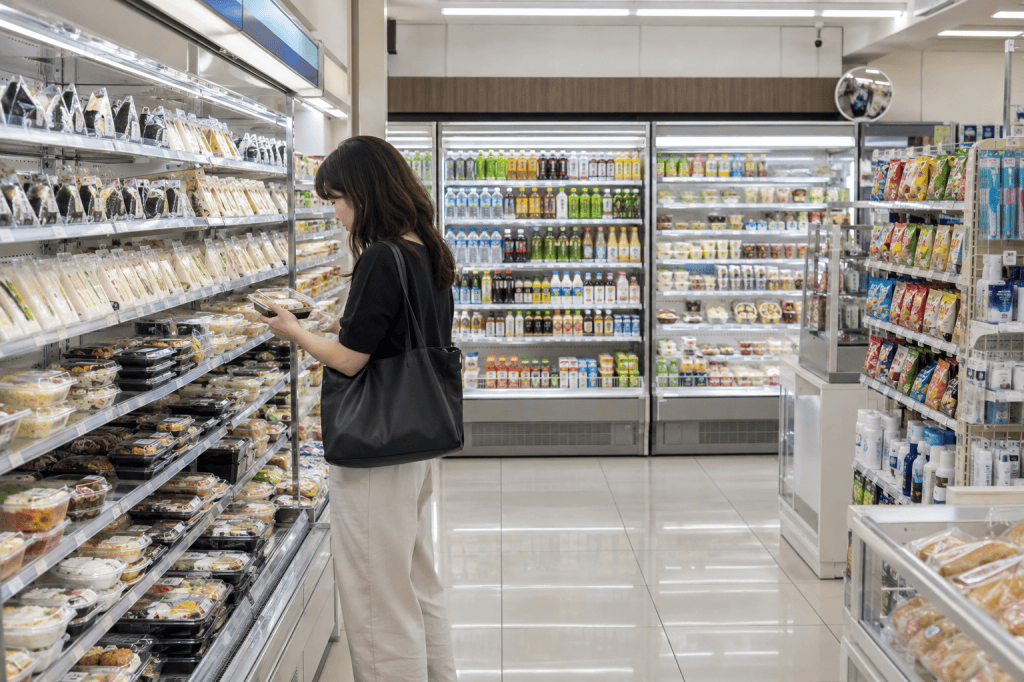
Konbini offer an impressive selection of ready-made meals, drinks, snacks and everyday essentials.
Each Convenience Store Has Its Own Personality
Japanese convenience stores may offer similar basic services, but they are not all the same.
Each chain has its own atmosphere, food selection and strengths.
One may be known for its reliable bento meals and coffee. Another may be popular for hot fried food. A different chain may attract customers with desserts, bakery products, healthier choices or collaborations with well-known restaurants and characters.
Even stores belonging to the same chain can feel different depending on their location. A store near an office district may offer a large lunch selection, while one near a tourist destination may stock souvenirs and regional products.
Limited-edition and seasonal items also give customers a reason to visit regularly.
Every Japanese Person Has a Favorite
Ask a group of Japanese people which konbini they like best, and almost everyone will have an answer.
Some people choose a favorite because they like its onigiri or desserts. Others prefer the coffee, fried food, bread or store layout.
Sometimes the reason is even simpler: it was the closest konbini to their childhood home, school or workplace.
People can become surprisingly passionate when comparing convenience-store food. Discussions about which chain has the best rice balls, sandwiches or desserts are common and can lead to very different opinions.
There is no single “best” konbini. Finding your own favorite is part of the fun.
Why Travelers Should Visit a Konbini
For visitors to Japan, a convenience store is one of the easiest places to experience everyday Japanese life.
You can see what people buy for breakfast, discover seasonal flavors and try affordable foods without needing to make a restaurant reservation.
Konbini are particularly helpful when:
- You arrive late and restaurants are closed.
- You need an early breakfast.
- You want food for a train journey.
- You need to withdraw cash.
- You forgot a travel essential.
- You want an inexpensive meal.
- You are curious about Japanese snacks and desserts.
Many products have pictures on their packaging, making shopping relatively easy even if you do not speak Japanese.
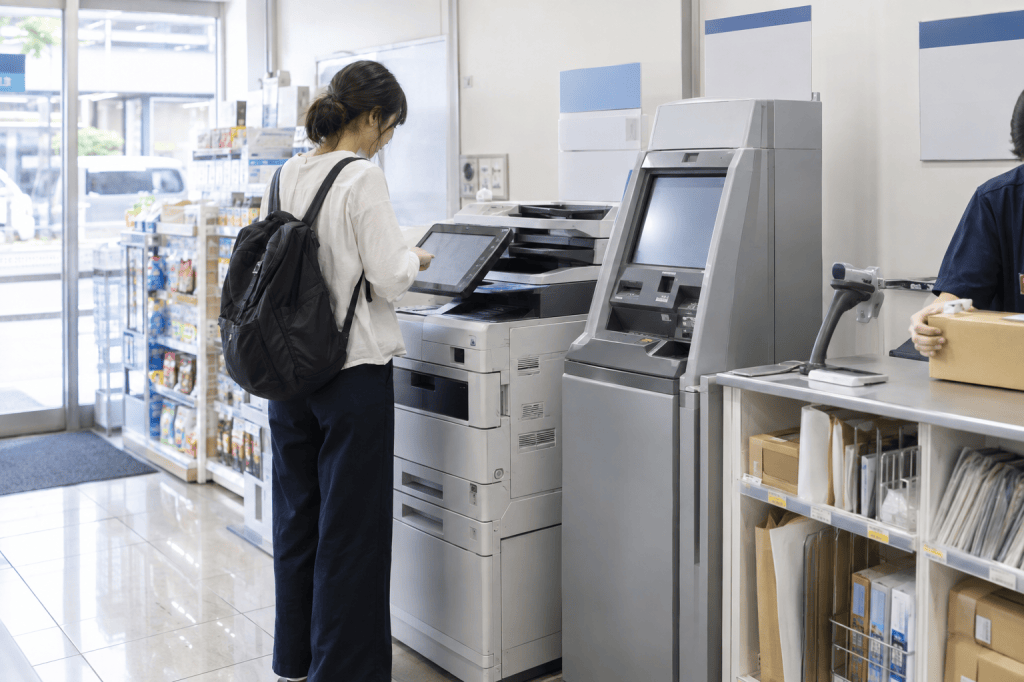
Many Japanese convenience stores also provide ATMs, printing and parcel services.
Tips for Visiting a Japanese Konbini
At the checkout, staff may ask whether you need a bag or whether you want your meal heated.
You may hear:
Fukuro wa irimasu ka?
Do you need a bag?
Atatamemasu ka?
Would you like it heated?
You can answer:
Hai, onegaishimasu.
Yes, please.
Or:
Daijōbu desu.
No, thank you / I’m fine.
Depending on the store, you may place your money or card into a payment machine rather than handing it directly to the cashier.
More Than Just a Shop
Japanese convenience stores are successful because they fit naturally into everyday life.
They provide food when people are hungry, practical help when something goes wrong and a familiar place to stop at almost any time of day.
For travelers, a konbini is convenient. For people living in Japan, it can feel like part of the neighborhood.
Visit a few different chains during your Japan trip, compare their food and services—and see which konbini becomes your favorite. 🇯🇵
 Japan Travel Note
Leave a comment