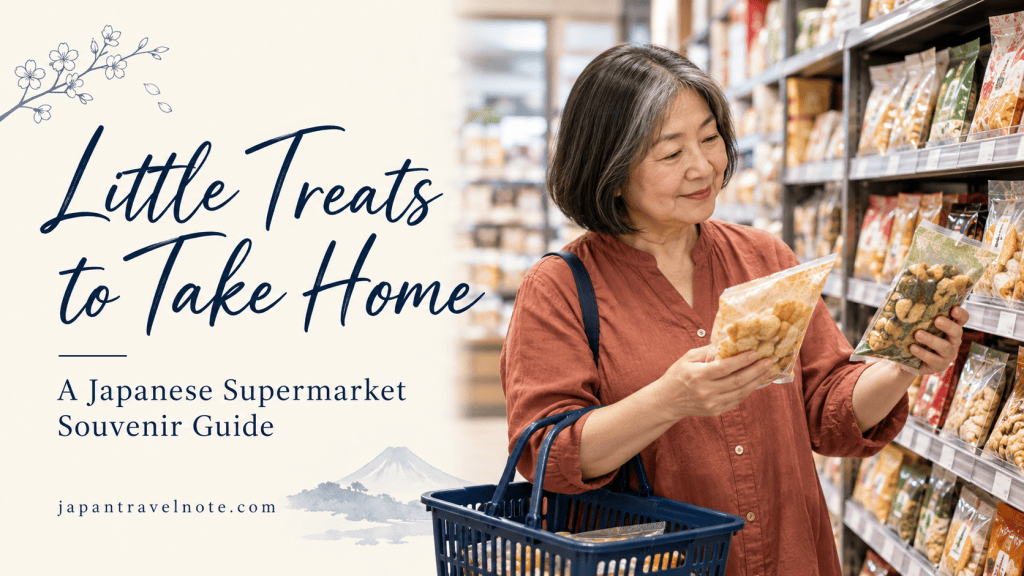
Japanese supermarkets can be a useful place to find small food souvenirs, from rice crackers and biscuits to chocolate and sweets. The best choice for your trip is something the recipient will enjoy, that can handle the journey and that your destination allows you to bring in.
Start with unopened products that can be stored under conditions you can maintain throughout your trip. Then check the wrapping, ingredients, date and space they will need in your luggage.
This guide focuses on snacks to take home. For food to eat during your stay, see the separate guides to supermarket breakfast ideas and easy supermarket dinners.
Start with the Recipient, Not the Biggest Bag
Before browsing, decide who the souvenir is for.
For colleagues, small individually wrapped portions can be convenient. For a friend who enjoys savory snacks, a rice-cracker assortment may be more appealing than another box of chocolate. For yourself, a small pack is a sensible way to try an unfamiliar flavor.
Think about when you will give the gift, too. A treat bought near the beginning of a long holiday needs enough time remaining for travel and delivery to its recipient.
Stock varies by branch. Use the categories below as browsing ideas rather than a promise that a particular supermarket will have every product.
Snack and Sweet Categories Worth Browsing
Rice Crackers: A Savory Starting Point
Look for senbei and arare in the snack aisle. Compare the flavor, pack size and wrapping rather than assuming every rice cracker is similar.
One example is Kameda’s Happy Turn. Its current 96 g product page describes a sweet-and-salty rice cracker and gives approximately 24 individually wrapped portions, with the actual count varying because the product is managed by weight. Check the bag in your hand rather than relying on a fixed count.
Thin crackers can break under pressure. If you want them to arrive looking presentable, plan some protection before filling your basket.
Biscuits, Cookies and Wafers
A biscuit multipack is worth comparing when you want portions to share. Check whether each piece is wrapped or whether the box contains one large inner bag.
Consider the shape as well as the flavor. Delicate wafers and thin biscuits need more care in a suitcase than their box might suggest. A cardboard sleeve alone may not prevent crushing.
Choose the format that fits your luggage, rather than buying a large box and discovering you need to remove all its packaging later.
Chocolate and Chocolate-Coated Snacks
Chocolate can be tempting, but consider the warmest part of the journey: sightseeing after shopping, transfers and the weather when you arrive home.
Meiji advises storing its chocolate in a cool place at 28°C or below, away from heat and humidity. That is manufacturer guidance, not a universal temperature rule for every sweet; follow your chosen product’s label.
If you cannot maintain the required conditions, choose a different treat. An insulated pouch does not guarantee temperature control over a long journey.
Candy, Gummies and Small Assortments
Small sweets may suit limited luggage space, but still check the details. Some bags contain loose sweets, while others have individually wrapped portions.
Match the flavor to the recipient rather than choosing only for unusual packaging. If ingredients or dietary requirements matter, confirm them on the actual product before buying.
For a mixed gift, two small, carefully chosen packs can be more useful than a bulky assortment bought simply because it looks impressive.
Individually Wrapped Does Not Mean Fully Labelled
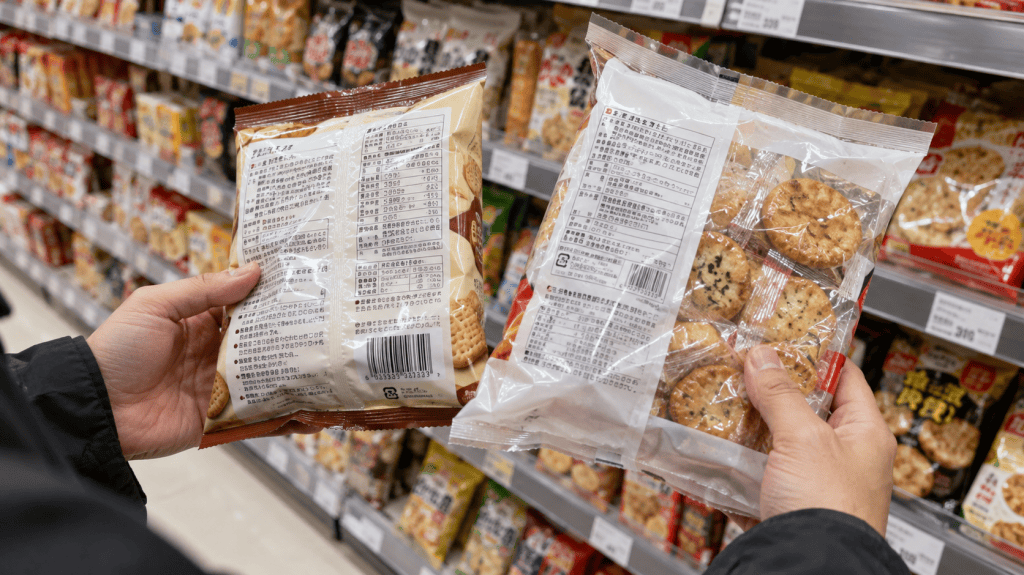
Look for 個包装, meaning individual wrapping. Check how many portions you are actually getting: a front-of-pack image is not a reliable piece count.
Keep the original outer bag or box. The small wrappers inside may not carry the full ingredient list, storage directions or best-before date.
Kameda explains that its stated best-before period assumes the outer bag remains unopened and the specified storage conditions are followed. Individual wrappers should not be treated as a promise that the original shelf life continues unchanged after opening the outer bag.
For gifts, it is simplest to keep the product together in its original packaging until you reach home. Share the ingredient and date information with the recipient when handing out separate portions.
Check the Date and Storage Instructions Together
Two useful Japanese labels are:
- 賞味期限 — best-before date: relates to expected quality under the stated storage conditions.
- 消費期限 — use-by date: applies to more perishable products and concerns the period during which they are considered safe under the stated conditions.
Japan’s Consumer Affairs Agency distinguishes these two meanings. A date is not a substitute for correct storage.
For souvenirs, check the date on the specific pack, not just a manufacturer’s general shelf-life description. Allow time for your remaining holiday, the flight and the days before you give the gift.
Also look for 保存方法, meaning storage method. 要冷蔵 means refrigeration is required. A sealed package is not automatically suitable for a long trip without refrigeration.
If the instructions are unclear, ask staff or choose an item whose storage requirements you can confidently meet.
Check Your Destination’s Food Import Rules Before Buying
Permission to buy food in Japan does not establish permission to take it into another country. Original commercial packaging helps identify a product, but does not guarantee admission.
Check the official customs or biosecurity guidance for your destination, including ingredient, quantity and declaration requirements. Check transit requirements too if you will enter another country on the way.
Returning to New Zealand
New Zealand’s Ministry for Primary Industries says all food must be declared, including small amounts and commercially packaged food. That includes snack souvenirs; do not assume sealed sweets are exempt from declaration.
Use MPI’s arrival declaration guidance. Declaring an item allows it to be assessed; it does not guarantee it will be admitted.
Travelling to Australia or Elsewhere
Australia’s Department of Agriculture, Fisheries and Forestry provides official guidance on bringing goods into Australia. Conditions depend on the product and its ingredients.
For any other destination, use that country’s official border authority. Avoid treating another traveler’s experience as approval for your particular snack.
Keep the original ingredient labels accessible for inspection rather than repacking sweets into unmarked bags.
Pack for Crushing, Heat and Inspection
Before closing your suitcase:
- Keep food in its original sealed packaging.
- Put fragile biscuits and crackers inside a rigid container if needed.
- Avoid placing heavy shoes or toiletries directly on top of snack boxes.
- Separate food from liquids that could leak.
- Keep ingredients and date labels available for inspection and for the recipient.
- Check your airline’s baggage allowance before buying more.
Choose non-melting alternatives if the route will be too warm for chocolate. For refrigerated sweets, do not assume a hotel fridge and a short-lived ice pack solve the whole journey.
The goal is a manageable selection that arrives in good condition, rather than the largest possible haul.
Supermarket or Donki for Food Souvenirs?
If you are already buying groceries, browse the supermarket snack aisle before planning another shopping trip.
If your list also includes cosmetics or other gifts, Donki may suit your route. Compare the exact product, quantity and final price rather than assuming one type of shop is always cheaper.
Read Japanese Supermarkets vs Don Quijote: Where Should You Shop? for help choosing your shopping stop.
Planning a Tourist Tax-Free Purchase?
Ask whether the supermarket participates before paying. Tourist tax-free shopping is not available automatically at every store.
For eligible purchases made from November 1, 2026, Japan’s refund system involves paying the tax-inclusive price first, with the consumption-tax equivalent refunded after the required departure customs confirmation. Food consumed in Japan is not eligible for that refund.
Keep snacks for eating during your holiday separate from souvenirs intended for export. For the procedure, read the Japan tax-free shopping and refund guide.
A Simple Souvenir Shopping Checklist
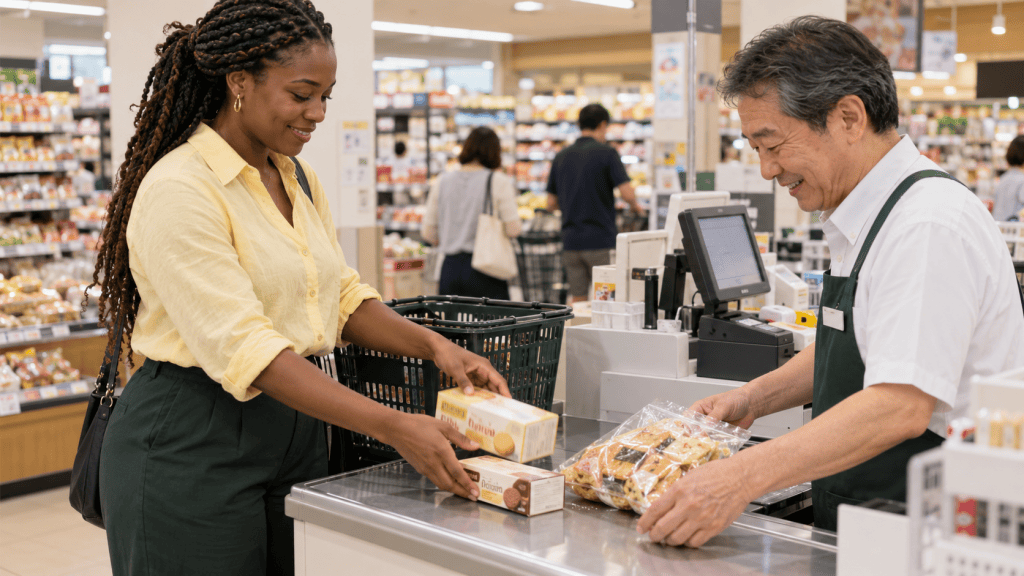
Before checkout, ask:
- Will the recipient enjoy this flavor?
- Is the wrapping suitable for sharing?
- Will the date leave enough time after I get home?
- Can I maintain the required storage conditions?
- Can I protect it from crushing or melting?
- Have I checked destination import and declaration requirements?
A few thoughtful supermarket finds can make a lovely reminder of Japan. Choose snacks for the people receiving them and for the journey they actually need to survive.
Official Information
- Kameda: Happy Turn 96 g product information
- Kameda: storage and packaging FAQ
- Meiji: chocolate storage
- Japan Consumer Affairs Agency: best-before and use-by dates
- New Zealand MPI: declaring items on arrival
- Australia DAFF: bringing goods into Australia
- Japan Customs: tourist tax-free refund system
Information checked on November 2, 2026. Product formats, storage instructions and border requirements can change. Check the package you buy and your destination’s current official guidance.


Leave a Reply