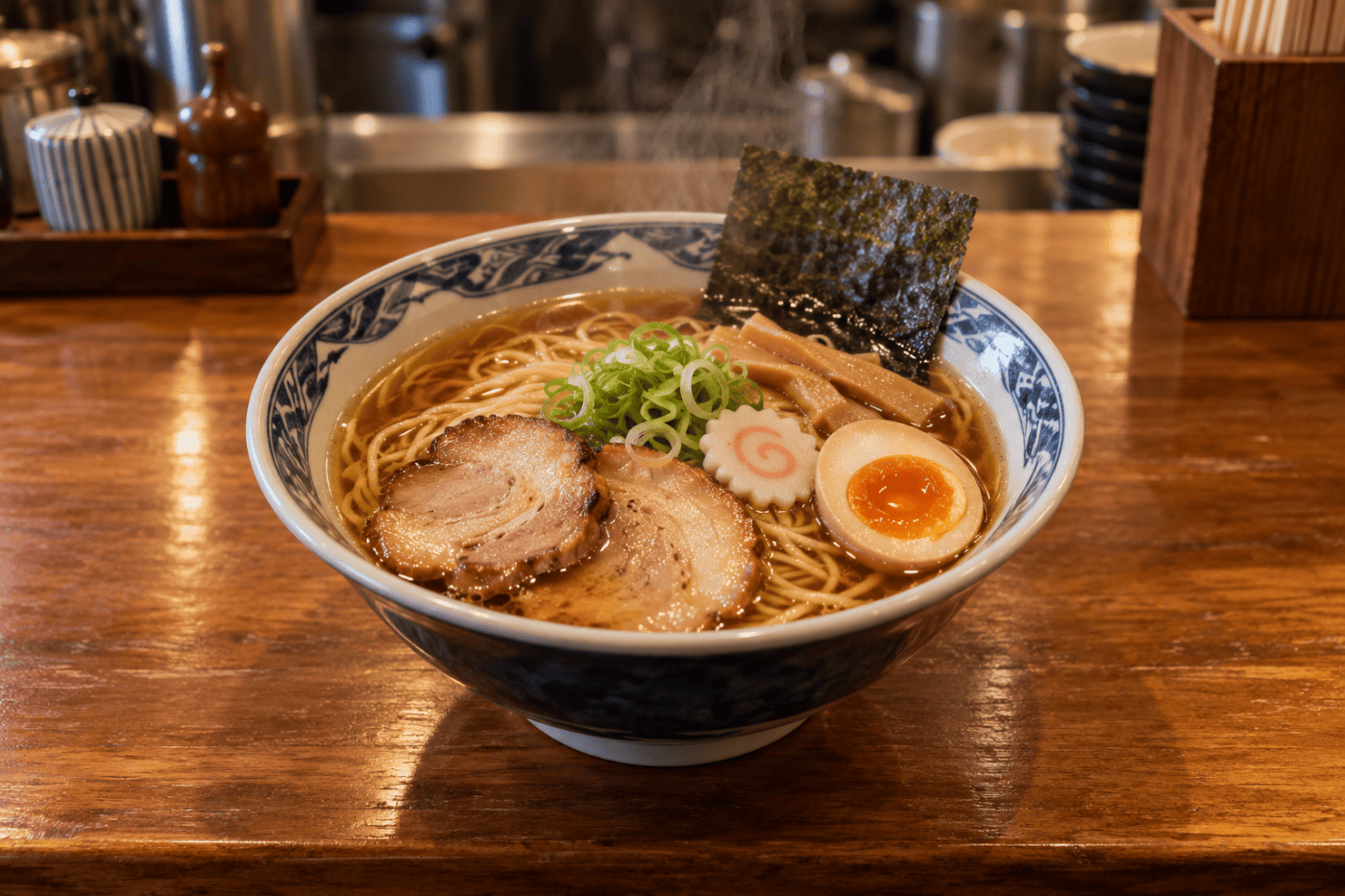
Ramen is one of Japan’s most famous foods, but it is much more than just noodles in soup.
For Japanese people, ramen is an affordable everyday meal, a quick lunch, a late-night comfort food and sometimes even a reason to travel. Every region has its own style, and many ramen shops spend years perfecting just one special bowl.
From light and delicate shio ramen to rich and creamy tonkotsu, there is a bowl for almost every taste.
What Is Ramen to Japanese People?
Ramen is casual, comforting and easy to enjoy.
You do not need to visit an expensive restaurant or understand complicated dining rules. Many ramen shops have simple counter seating, and it is completely normal to eat alone.
For office workers, ramen can be a quick lunch. For students, it is an affordable and filling meal. For others, it is the perfect food after a long day—or even after a night out.
But ramen is not only fast food. Many Japanese people are passionate about it. They travel to famous ramen shops, wait in long lines and compare the flavors of different broths and noodles.
Each shop has its own recipe, so even two bowls of shoyu ramen can taste completely different.
A Short History of Ramen in Japan
Ramen has its roots in Chinese noodle dishes.
Chinese-style wheat noodles became popular in Japan during the late nineteenth and early twentieth centuries, especially in port cities such as Yokohama.
Early ramen was usually simple: noodles served in a light broth with toppings such as sliced pork, bamboo shoots and green onions.
After World War II, ramen became more widely available. Small street stalls served hot, inexpensive bowls to people looking for an affordable and filling meal.
As ramen spread across the country, different regions began creating their own versions using local ingredients and flavors.
In 1958, Momofuku Ando created Chicken Ramen, the world’s first instant ramen. Cup Noodles followed in 1971 and helped make ramen famous around the world.
Today, ramen is an important part of modern Japanese food culture.
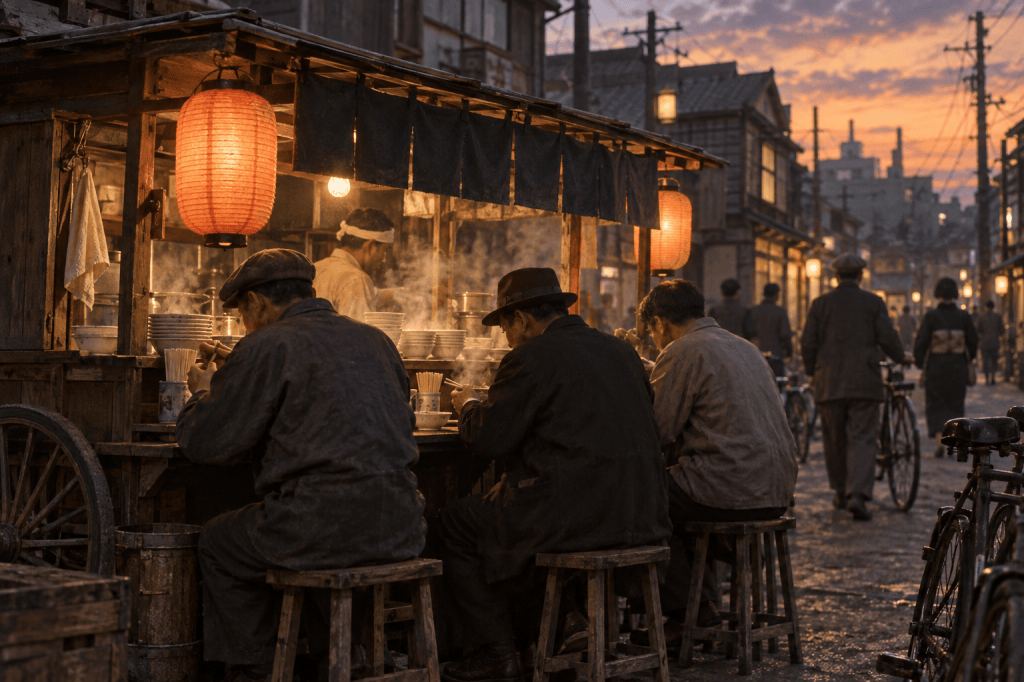
A traditional Japanese ramen stall, reflecting the dish’s history as an affordable everyday meal.
What Is in a Bowl of Ramen?
A bowl of ramen usually has four main parts.
Noodles
Ramen noodles are made mainly from wheat flour, water, salt and kansui. Kansui gives the noodles their distinctive texture and slightly yellow color.
The noodles can be thin or thick, straight or curly, soft or firm.
Soup
The soup may be made from chicken, pork bones, seafood, dried fish, seaweed or vegetables.
Some ramen soups are clear and light, while others are thick, creamy and rich.
Tare
Tare is the concentrated seasoning that gives ramen its main flavor.
The most common seasonings are soy sauce, salt and miso.
Toppings
Popular toppings include chashu pork, marinated egg, green onions, bamboo shoots, nori seaweed, bean sprouts, corn and butter.
Popular Types of Ramen in Japan
Shoyu Ramen
Shoyu means soy sauce.
Shoyu ramen usually has a clear brown soup with a savory and balanced flavor. It is one of the most traditional types of ramen and is especially associated with Tokyo.
It is a good choice if you are trying Japanese ramen for the first time.
Shio Ramen
Shio means salt.
Shio ramen usually has a light, clear soup and a delicate flavor. It may be made with chicken, seafood or vegetable stock.
Choose shio ramen if you prefer something lighter.
Miso Ramen
Miso ramen has a rich, savory and slightly sweet flavor.
It is especially famous in Sapporo, Hokkaido, where it is often served with corn, butter, bean sprouts and ground pork.
This warming ramen is perfect for cold weather.
Tonkotsu Ramen
Tonkotsu ramen is made by boiling pork bones for many hours. This creates a cloudy, creamy and strongly flavored soup.
It is particularly famous in Hakata, Fukuoka. Hakata-style ramen usually comes with very thin noodles, chashu pork, green onions and wood ear mushrooms.
Tsukemen
Tsukemen is dipping ramen.
The noodles and soup are served in separate bowls. You pick up the noodles and dip them into the concentrated soup before eating.
The noodles are usually thick and chewy.
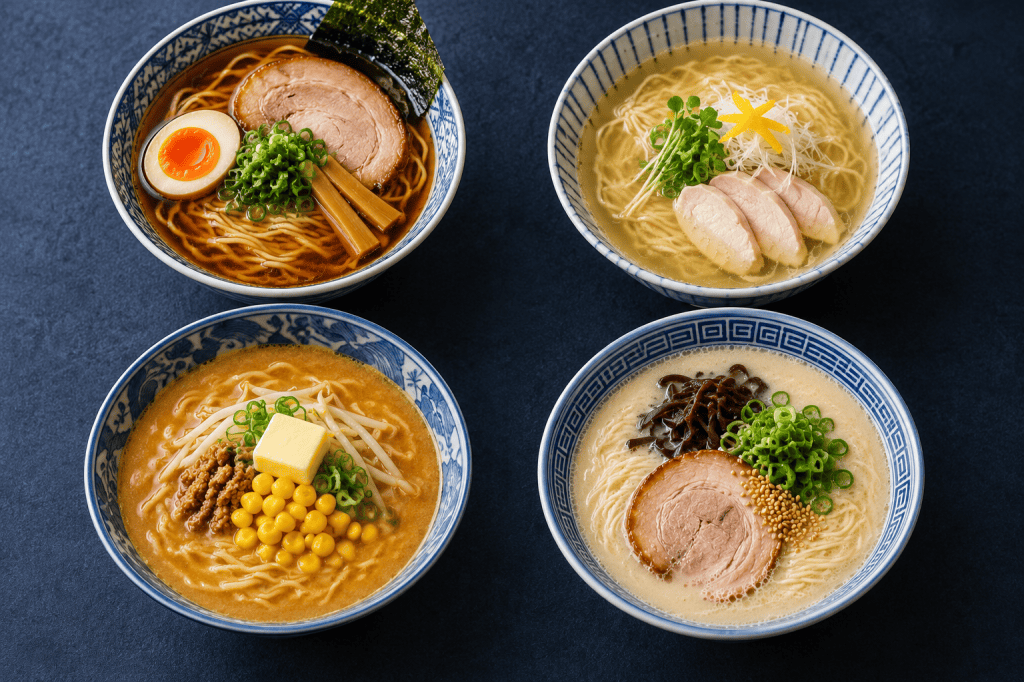
Popular Japanese ramen styles: shoyu, shio, miso and tonkotsu.
Famous Regional Ramen Styles
Different parts of Japan are known for different styles of ramen.
- Sapporo: Rich miso ramen, often served with corn and butter
- Hakata: Creamy tonkotsu ramen with thin, straight noodles
- Tokyo: Shoyu ramen made with soy sauce, chicken and seafood flavors
- Kitakata: Thick, curly noodles in a lighter soy sauce soup
- Kumamoto: Tonkotsu ramen flavored with roasted garlic or black garlic oil
Trying regional ramen is a delicious way to experience the local culture while traveling around Japan.
How to Order Ramen in Japan
Many ramen shops use a ticket vending machine near the entrance.
First, insert your money and choose the ramen you want. The machine will give you a ticket, which you hand to a staff member.
Some modern machines have an English-language option. If there is no English, look for photographs of the different ramen bowls.
At some shops, you may also be asked to choose:
- The firmness of your noodles
- The strength of the flavor
- The amount of oil
- Extra toppings
Do not worry if you make a slurping sound while eating. Slurping noodles is completely acceptable in Japan, although it is not required.
Which Ramen Should You Try?
If you are not sure which ramen to order, use this simple guide:
- Try shoyu ramen for a classic and balanced flavor.
- Try shio ramen for something light and delicate.
- Try miso ramen for a rich and warming bowl.
- Try tonkotsu ramen for a creamy and powerful flavor.
- Try tsukemen if you love thick, chewy noodles.
There is no single “best” ramen. The fun is trying different bowls and discovering your favorite.
Save this guide for your Japan trip—and see how many types of ramen you can try! 🇯🇵🍜
 Japan Travel Note
Leave a comment