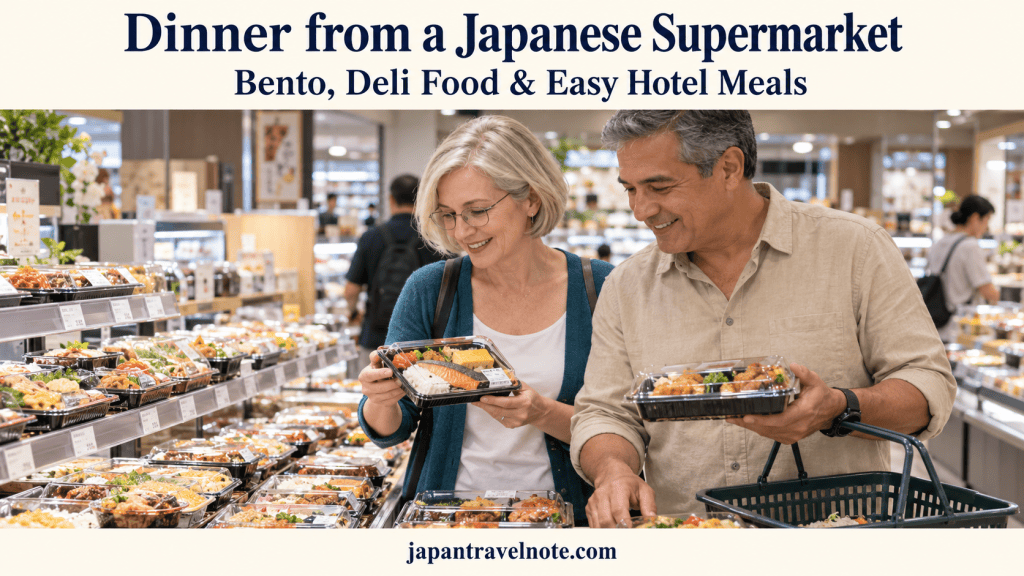
Japanese supermarkets are a useful place to pick up dinner when you want a relaxed evening at your hotel. Start with a bento, a ready-to-eat sushi tray, or a few prepared side dishes. Before paying, check the storage instructions, use-by date and whether you need a microwave.
After a long day of sightseeing, choosing dinner from a supermarket can be part of the fun. You can browse, pick a few things that appeal to you and enjoy a quieter evening without planning another restaurant visit.
This guide focuses on dinner: what to look for, how to put a meal together, and what to check before taking it back to your accommodation.
Look for the Prepared-Food Section
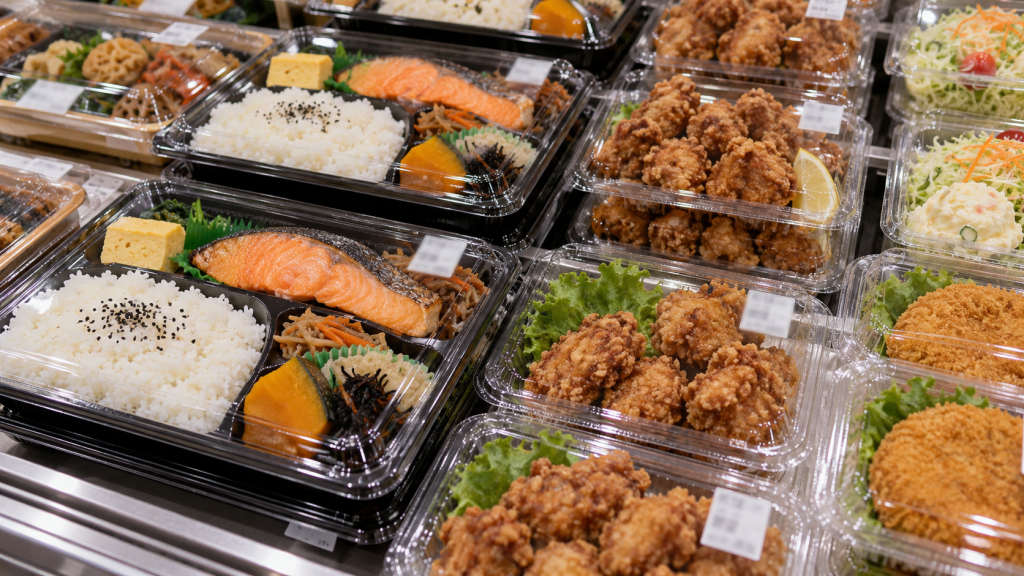
The word sozai, often written 惣菜 or お惣菜, refers to prepared dishes. Supermarket deli departments can include bento, sushi, fried food and salads. (lifecorp.jp)
The selection varies by branch and time of day, so treat the ideas below as a shopping guide rather than a promise that every item will be available.
Make sure you are browsing the ready-to-eat section. A tray of marinated raw meat or uncooked seafood may look convenient, but it is not a hotel dinner unless you have appropriate cooking facilities.
1. Bento: The Simplest Starting Point
A bento is a boxed meal. For a straightforward dinner, look for one containing rice, a main dish and several smaller sides.
Depending on the store, options may include chicken, grilled fish, pork cutlets or other cooked dishes. Look through the clear lid and check the description rather than choosing by the photograph alone. (seiyu.co.jp)
My suggestion: start with one bento and a drink. Add a side only if you still want something extra. It is easy to buy more than you need when everything comes in a small tray.
Some products have heating instructions; others may be intended to eat without reheating. Follow the instructions on the specific meal.
2. Sushi Trays: A Dinner That Does Not Need Reheating
A ready-to-eat sushi tray can be convenient when you have no microwave.
Check the actual assortment. It may include raw fish, cooked toppings, egg, rolls or inari sushi—rice in seasoned fried-tofu pockets. Not every tray contains the same combination.
Look for included soy sauce, wasabi or ginger, and check whether chopsticks are provided.
Keep the product under its stated storage conditions and eat it promptly. Buying sushi before several more hours of sightseeing is not a good plan. (maff.go.jp)
If you do not eat raw fish, choose by the ingredients rather than assuming every roll or cooked-looking topping suits your diet.
3. Karaage, Croquettes and Other Fried Dishes
Fried dishes are useful when you want to build your own meal instead of buying a complete bento.
Look for options such as:
- Karaage: Japanese-style fried chicken.
- Korokke: croquettes, often with potato-based fillings.
- Tonkatsu: breaded pork cutlet.
- Tempura: battered seafood or vegetables. (lifecorp.jp, aeonfoodstyle.netsuper.aeon.com, seiyu-recruit.com)
Recipes and fillings vary, so check the label. A vegetable-looking croquette does not automatically mean it is meat-free.
My suggestion: choose one small fried-food pack, then add a ready-to-eat rice item and a vegetable side.
If you prefer your fried food hot, confirm that you can heat it appropriately. Microwaving may warm it, but it will not necessarily restore a crisp coating.
4. Salads and Small Side Dishes
A small side can make a boxed meal more interesting without adding a second full dinner.
Depending on the store, you may find green salads, potato salad, cooked vegetables, pickles or other deli dishes.
Check whether dressing is included or sold separately. For small dishes, read the ingredients rather than relying on appearance.
A salad or vegetable dish can contain fish-based stock, meat, egg, dairy or other ingredients you might not expect. If you have an allergy or dietary restriction, ask for reliable product information. Translation apps can help you read a label, but they cannot establish that a meal is safe for you. (pref.saitama.lg.jp)
5. Ready-to-Eat Noodles
Some stores sell prepared noodle meals, such as yakisoba or chilled noodles.
Check how the particular product is meant to be served. Some require heating; others come with separate sauce and toppings that you mix before eating.
Be especially careful not to confuse a ready-to-eat noodle meal with uncooked noodles from the chilled ingredients section.
If the package needs boiling, a frying pan or other cooking equipment, choose something else unless your accommodation provides those facilities.
Three Easy Dinner Combinations
These are meal ideas, not fixed supermarket sets.
The Easy First-Night Dinner
One bento, a small salad and a drink.
This is a simple starting point when you are tired and do not want to compare lots of individual dishes.
The No-Microwave Dinner
A ready-to-eat sushi or roll assortment, a suitable cold side and a drink.
Follow the storage directions and buy it close to the time you plan to eat.
The Mix-and-Match Dinner
A small cooked main dish, a ready-to-eat rice item and a vegetable side.
Check whether any component requires heating. Packaged plain rice often needs microwaving, so do not assume it is a no-equipment option.
Check Your Hotel Facilities Before Shopping

Business hotels in Japan generally allow guests to bring food into their rooms. However, some luxury and resort hotels restrict outside food, so check your hotel’s rules before buying dinner to eat in your room.
Do not assume every hotel has a microwave or that a small minibar can keep food at the temperature stated on the label.
If you cannot meet the storage requirements, buy a suitable meal to eat promptly instead of stocking up.
How to Warm Your Dinner
If the meal is suitable for microwaving, follow the package directions.
Check the microwave wattage and the recommended heating time. Remove lids, sauce packets, decorative dividers or other parts only as directed.
Not every plastic tray is microwave-safe. Do not put foil or other unsuitable packaging in the microwave. If transfer to another container is required, use a suitable microwave-safe container. (kokusen.go.jp, kokusen.go.jp)
Ask staff if you are unsure. Do not assume the supermarket will heat every meal at checkout; facilities and services differ.
Also keep cold components, such as salads or sushi, separate from food you intend to heat.
Useful Japanese Words on Food Labels
弁当 — Bento: boxed meal.
惣菜 / お惣菜 — Sozai: prepared dishes.
消費期限 — Shōhi kigen: use-by date. Check any printed time as well as the date.
賞味期限 — Shōmi kigen: best-before date.
要冷蔵 — Yō reizō: keep refrigerated. Read any stated temperature.
加熱用 — Kanetsu-yō: intended for cooking or heating; do not assume it is ready to eat.
The distinction between use-by and best-before matters. Japanese official guidance explains that the dates assume the food remains unopened and is stored as instructed. (maff.go.jp)
Opening the package or leaving it warm does not preserve the same assurance until the printed deadline.
Understanding Discount Stickers
You may see reduced-price stickers on prepared food. Useful examples include:
- 20%引: 20% off.
- 30%引: 30% off.
- 半額: half price.
- 50円引: 50 yen off.
A yen reduction is different from a percentage reduction. Check whether the label shows a discount amount or the final selling price.
There is no single discount time for every supermarket. Do not plan dinner around a promised “half-price hour”—ask the store or check what is actually available.
A discount does not extend the food’s use-by time or change its storage requirements. Buy only what you can eat appropriately.
Keep the Supermarket as Your Last Stop
For chilled prepared food, finish your other shopping first and head back promptly.
Japan’s Consumer Affairs Agency advises keeping the journey short and avoiding carrying takeaway food around for a long time. Follow the product’s storage instructions, and eat promptly. (caa.go.jp)
Do not leave dinner on a warm hotel desk while going out again. Reheating is not a way to make incorrectly stored food safe. (caa.go.jp)
Before you eat, wash your hands and check that you have any needed cutlery.
A Few Practical Checkout Tips
Check these before leaving the store:
- Do you have chopsticks, a spoon or a fork?
- Are sauces and dressing included?
- Do you need a shopping bag?
- Have you checked the final amount payable?
- Can you carry the food level without crushing it?
You can ask:
“Ohashi wa arimasu ka?”
“Do you have chopsticks?”
“Kore wa atatameraremasu ka?”
“Can this be heated?”
For allergies, do not rely on a short general phrase alone. Explain your specific needs and seek a clear answer about the product.
My Simple Advice
Start with one main meal and one optional side. Choose food that works with the facilities you actually have, and make the supermarket your final stop before heading back.
You do not need to turn every evening into a hotel dinner. But for a tired travel day, a supermarket meal can offer a little variety and a relaxed way to try everyday Japanese food.
Planning tomorrow morning too? Read what to buy for breakfast at Japanese supermarkets.
For your wider shopping plans, see Japanese Supermarkets vs Don Quijote: Where Should You Shop?.
Official Information
- Consumer Affairs Agency: Takeaway food safety
- MAFF: Understanding food date labels
- National Consumer Affairs Center: Microwave safety
- SEIYU: Prepared-food selection
Information checked on 29 October 2026. Products, facilities and availability vary by store.


Leave a Reply