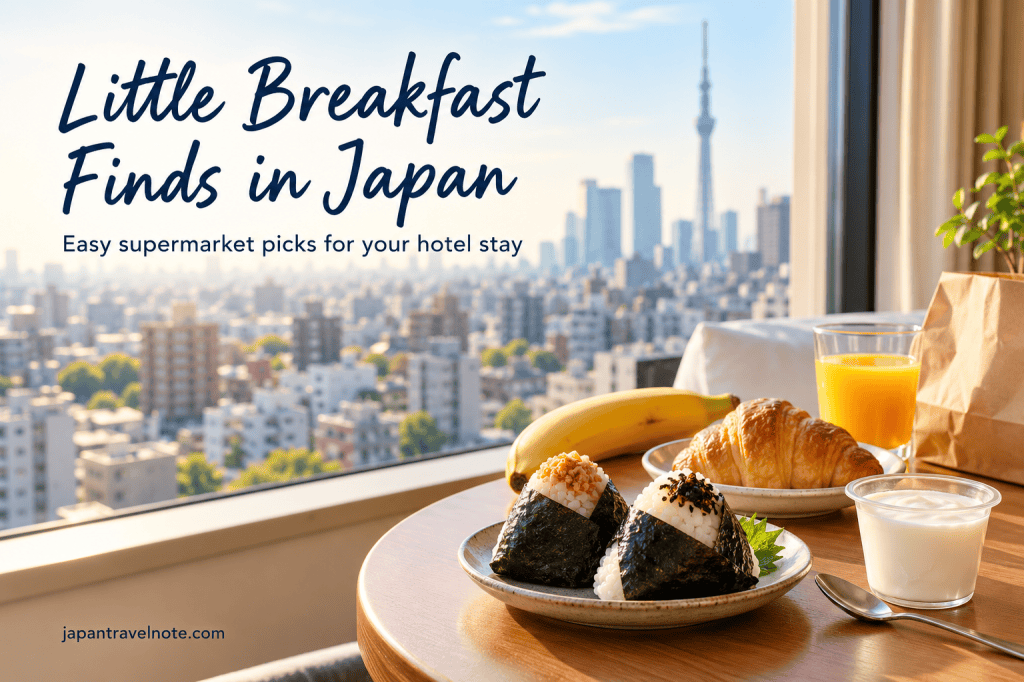
Not every morning in Japan needs to start with a hotel buffet or a search for an open café.
If you want a simple breakfast before sightseeing, a nearby supermarket is worth checking for bread, yogurt, fruit, cereal, drinks, and ready-to-eat foods. The selection depends on the branch, but you can often put together something that suits your appetite and your hotel facilities.
The important question is not just what looks delicious. It is also what you can store, prepare, and eat comfortably where you are staying.
Here are six breakfast ideas to look for, plus a few practical things to check before buying.
First, Check What Your Hotel Provides
Before shopping, find out whether you have:
- A refrigerator suitable for storing chilled food.
- Access to a microwave.
- A kettle.
- Bowls, spoons, or chopsticks.
- A suitable place to eat.
A kettle does not replace a microwave, and a room cooler may not provide the storage temperature required on a food label.
If you are unsure about an appliance or bringing food into a shared area, ask the hotel.
1. Onigiri: A Savory Breakfast Without Cooking
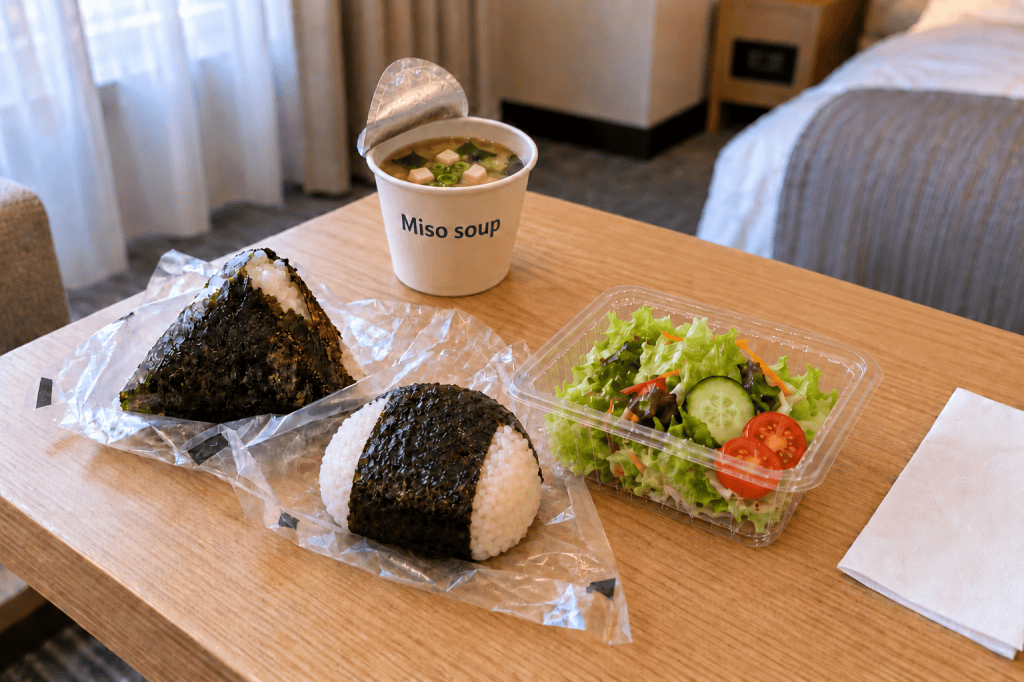
Onigiri are rice balls, often with a filling and sometimes wrapped in seaweed. Look in the supermarket’s prepared-food section rather than the uncooked rice aisle.
If you find a ready-to-eat option you like, it can be an easy choice for a morning when you do not want something sweet.
Check the filling, storage instructions, and use-by date. Follow any numbered opening instructions on individually wrapped packages; the seaweed may be kept separate from the rice until you open it.
Breakfast idea: onigiri with a drink, plus fruit if you want something extra.
Do not assume that all rice products are ready to eat. Microwave rice packs are a different product and need the preparation shown on their packaging.
2. Bread and Bakery Items: An Easy Place to Start
If you usually eat bread for breakfast, browse the bread section before deciding you need to change your routine in Japan.
Look for rolls, croissants, sliced bread, and sweet or savory buns. Choose a format you can enjoy without appliances you do not have.
Packaged buns are particularly convenient when you want an individual portion. If a product has a cream filling or comes from a chilled shelf, check its storage requirements.
Breakfast idea: a bread roll or bun with a banana and your preferred drink.
A whole loaf may make sense for a longer stay. For one morning, a smaller pack can be more practical.
3. Yogurt: Choose a Portion You Can Finish
Yogurt is another option for a light hotel breakfast. Check the chilled dairy section and compare the package sizes.
For example, AEON’s TOPVALU range includes plain yogurt. Other options and sizes vary by store, so check what is actually available rather than relying on a particular product photo. (topvalu.net)
If you are staying for only one night, a small cup can be easier than a large tub. Remember to check whether you have a spoon.
Breakfast idea: yogurt with a banana, or a little cereal added just before eating.
Keep chilled products refrigerated according to their labels. Buying them the night before only works if you can store them properly.
4. Fruit: Think About Preparation
Fruit can make a simple breakfast feel more complete, but choose with your hotel setup in mind.
A banana is straightforward to peel. Other fruit may need washing, peeling, or cutting. If you choose a prepared fruit cup, check the storage instructions and whether you need a fork.
Compare portions as well as price. A large pack is only useful if you will finish it during your stay.
Breakfast idea: fruit with bread or yogurt.
If you are shopping after sightseeing, leave chilled fruit until the end of your visit and take it back promptly.
5. Cereal or Granola: Useful When You Have a Bowl

Cereal is an option if you prefer a familiar breakfast. TOPVALU, for example, has a cereal category in its official product range. (topvalu.net)
Before buying, check the serving setup. A large bag of cereal and a carton of milk may be inconvenient if your room has no bowl, spoon, or suitable refrigerator.
Breakfast idea: cereal with milk, or a small amount of granola with yogurt.
Check ingredients when choosing, especially if you have food allergies. A product photograph or translation of the name alone does not tell you everything in the package.
6. Sandwiches: Check the Chilled Prepared-Food Area
If available at your branch, a packaged sandwich can be a convenient breakfast without cooking.
Read the filling information carefully rather than relying only on what you can see through the wrapper. Check the use-by date and refrigeration instructions before buying for the following morning.
Breakfast idea: a sandwich with fruit and a drink.
If the nearby supermarket does not have a suitable selection, a convenience store is another option. Japan’s official tourism guide lists sandwiches, onigiri, fruit, and drinks among convenience-store breakfast choices. (japan.travel)
Three Simple Breakfast Combinations
For a Room Without a Refrigerator
Choose bread or a bun that is labeled for room-temperature storage, a banana, and an unopened drink that can also be stored at room temperature.
Buy only what you need, and follow each product’s label.
For a Room with a Suitable Refrigerator
Try yogurt, fruit, and a small bread portion.
This is a flexible option if you want to shop the evening before and have an easy start the next day.
For a Savory Breakfast
Choose ready-to-eat onigiri or a sandwich with a drink.
If buying ahead, make sure the date covers when you plan to eat it and that you can meet the storage instructions.
Can You Buy Breakfast the Night Before?

Yes, provided the food’s date and storage requirements allow it.
For chilled items, make the supermarket your final shopping stop and put the food into a suitable refrigerator promptly. Do not carry yogurt, sandwiches, or other chilled foods around during an evening of sightseeing. (hokeniryo1.metro.tokyo.lg.jp)
Two useful Japanese label terms are:
- 消費期限: use-by date.
- 賞味期限: best-before date.
These dates apply to unopened products stored as directed. Once you open something, follow any additional instructions.
You may also see 要冷蔵, meaning “keep refrigerated.” (caa.go.jp, maff.go.jp)
Supermarket or Convenience Store for Breakfast?
Choose the place that fits your morning.
A supermarket is worth browsing when you want to compare groceries or buy supplies for several breakfasts. A convenience store may be the simpler option for an early departure, depending on local opening hours.
Do not assume that a supermarket opens early or that every convenience store operates around the clock. Check your branch before relying on it.
If you are deciding where to do your wider shopping, read Japanese Supermarkets vs Don Quijote: Where Should You Shop?.
A Small Breakfast Can Make Travel Mornings Easier
You do not need to buy a full basket for one breakfast. Start with one main item, add fruit or yogurt if you want it, and choose a drink.
For families, buying familiar foods alongside one new thing to try can keep breakfast flexible. If you are planning a family visit to Tokyo, you may also like Tokyo with Kids: A Flexible 3-Day Family Itinerary.
A supermarket breakfast is simply another way to enjoy your trip: a little everyday shopping, something good to eat, and a morning planned around you.


Leave a Reply