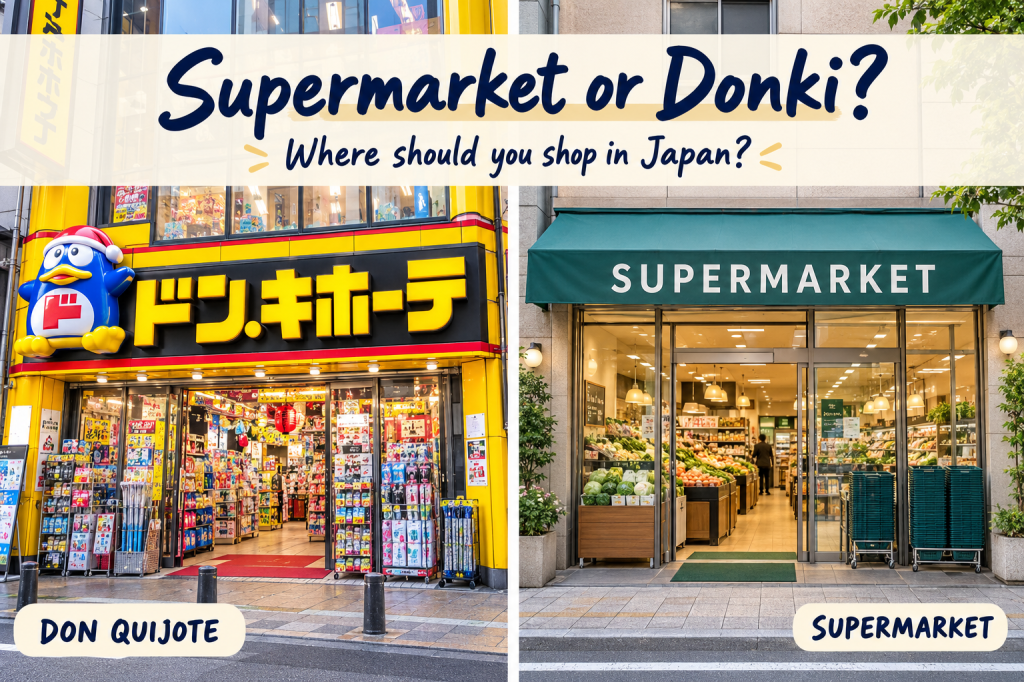
Should you shop at a Japanese supermarket or Don Quijote during your trip?
For everyday groceries, cooking ingredients and food to enjoy during your stay, I would start with a supermarket. If your shopping list includes snacks, skincare, cosmetics and small souvenirs, Don Quijote—often called Donki—is worth considering.
There is plenty of overlap, though. Neither is automatically cheaper, and the best choice depends on what you want to buy, which branch is nearby and how much time you have.
Here is how I would choose.
For Fresh Food and Cooking Ingredients: Start with a Supermarket
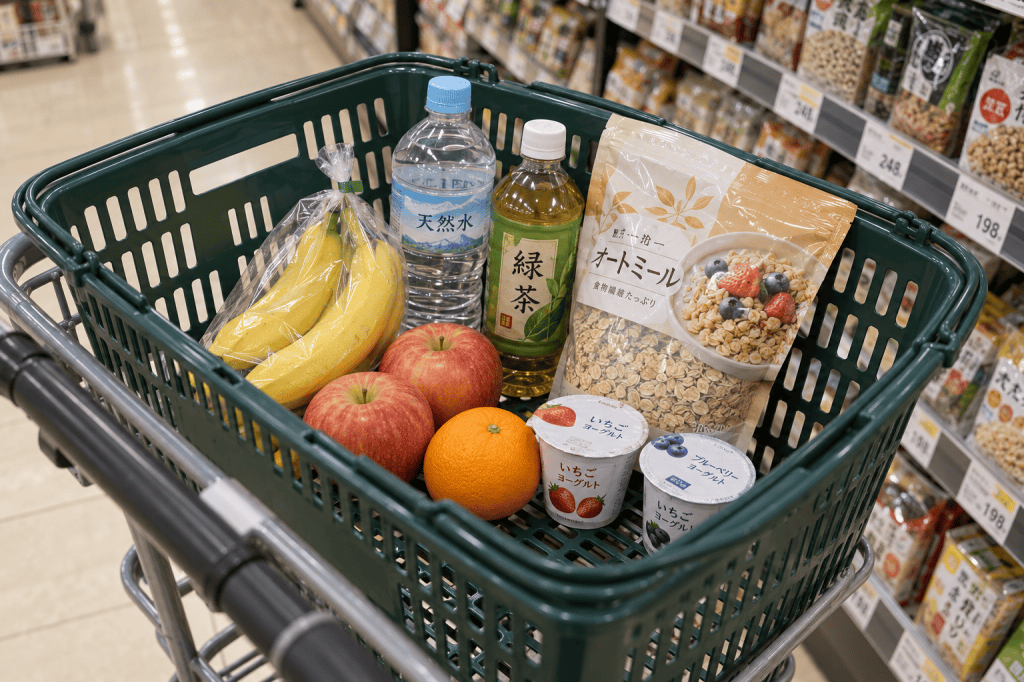
If you are staying somewhere with a kitchen, a supermarket is a practical first stop.
You can browse ingredients for simple meals, drinks, snacks and prepared foods. It is also a useful place to look for everyday Japanese pantry items such as tea, furikake rice seasoning and instant miso soup.
For food souvenirs, I would focus on small packages that you know how to use. Tea bags are straightforward gifts, while seasoning packets can be interesting for someone who enjoys cooking.
Check storage instructions carefully. Something that looks easy to pack may still need refrigeration.
A supermarket visit does not need to become a major outing. A nearby branch can be enough for breakfast supplies and a few things to try.
For Beauty Products and a Mixed Shopping List: Consider Donki
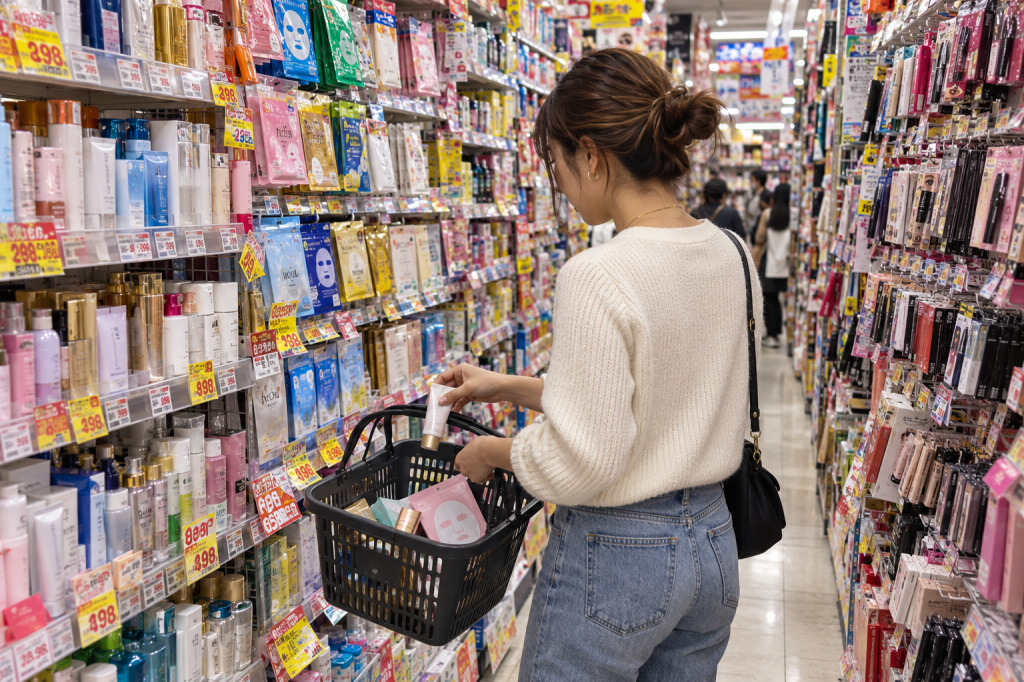
Donki is useful when you want to browse several product categories in one trip.
Depending on the branch, you may find skincare, cosmetics, haircare, toiletries, snacks, household items and souvenirs. Larger stores may also carry clothing, luggage and electronics.
That makes it a convenient option when your list includes both a beauty product for yourself and small gifts for other people.
Before shopping for skincare, save a photo of the exact product you want. Similar packaging can make different formulas or sizes difficult to tell apart.
For ideas, browse my Japanese drugstore beauty shopping guide. Stock varies, so treat it as a starting point rather than a guarantee that every item will be available.
For Japanese Snacks: Either Can Work
You do not need to go to Donki just to buy Japanese snacks.
Supermarkets are worth checking for rice crackers, chocolate, biscuits and other everyday treats. Donki is another option, especially if you are already visiting for beauty products or souvenirs.
Rather than choosing by the store name, compare what is actually on the shelf.
Check the flavour, weight, number of pieces and whether they are individually wrapped. Two similar-looking bags may contain different amounts.
For gifts, individually wrapped pieces are convenient. For yourself, a small pack lets you try something before buying more.
Is Don Quijote Cheaper Than Japanese Supermarkets?
There is no reliable rule that Donki is cheaper for every product—or that supermarkets always offer better value.
The answer can change with the item, branch, promotion and package size.
For a useful comparison, check:
- The exact product and version
- The quantity or weight
- The total price including tax
- Any conditions attached to a discount
A larger pack may cost less per piece, but it is only good value if you want that much.
Also consider the cost of getting there. Travelling across the city to save a small amount on snacks may not be worth the extra fare and time.
For a few inexpensive purchases, the convenient option can be the sensible one.
Do Supermarkets Sell Cosmetics? Does Donki Sell Groceries?
The distinction is not absolute.
A large supermarket or general merchandise store may have beauty, clothing and household sections as well as food. A small neighbourhood supermarket may have a much narrower range.
Likewise, some larger Donki branches sell fresh food and groceries alongside their other products.
Think of “supermarket for food, Donki for a mixed shopping list” as a planning shortcut, not a rule about every store.
Check the specific branch before making a special trip for something important.
Which Is Better If You Have Limited Time?
Start with your actual shopping list.
If you need breakfast, drinks and something for dinner, I would choose a nearby supermarket.
If you want snacks, sheet masks and a souvenir pouch in the same trip, I would consider a suitable Donki branch.
Opening hours matter, too. Check the branch you plan to visit rather than assuming it will be open late.
You can use the official Don Quijote store finder or search your map app for supermarkets near your accommodation. The AEON store finder is another option.
Leave time to browse and pay, especially when you have a train, dinner booking or flight to catch.
What About Tax-Free Shopping?
If tax-free shopping matters to your purchase, check whether the specific store offers it and which conditions apply on your shopping date.
Do not assume every supermarket provides the service, or that every purchase qualifies.
Compare the final amount you would actually pay rather than choosing a store solely because it advertises tax-free shopping.
My Suggestion: Choose by Your Shopping List
You do not have to visit both.
For a food-focused shopping trip, start with a supermarket. For beauty products, travel essentials and souvenirs alongside snacks, consider Donki.
If you have time for both, try a small snack purchase early in your trip. You can then buy more of what you actually enjoyed before heading home.
For more ideas, read my Don Quijote Japan shopping guide.
Before packing food souvenirs, check your destination’s official food import rules. Keep the original packaging and check ingredients, expiry dates and storage instructions.
The best shopping stop is the one that fits your trip—and leaves you with things you are happy to use, eat or share.


Leave a Reply