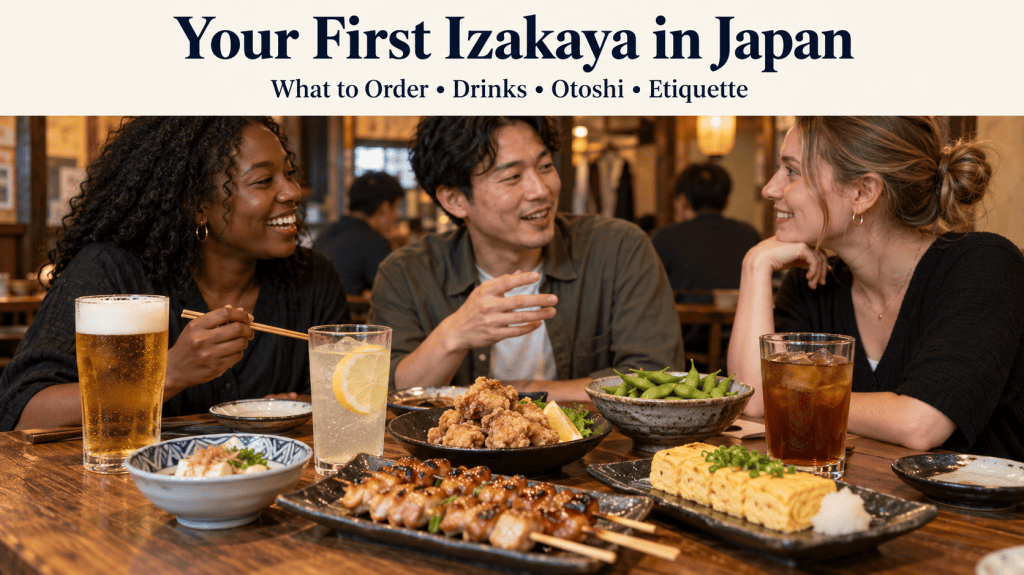
An izakaya is a casual Japanese pub where food is just as much a part of the evening as drinks. You can share grilled skewers, try Japanese comfort food, and order a few more dishes whenever something catches your eye.
For first-time visitors, the unfamiliar parts are often the ordering system, the small appetizer you did not order, and the all-you-can-drink menu.
This guide explains what to order, how the charges work, and what to know before a night out in Japan.
What to Expect at an Izakaya
Some izakaya are tiny neighborhood establishments with counter seating. Others are larger restaurants with tables, booths, and multilingual ordering screens.
Food is commonly shared, so you can start with a few dishes and add more as you go. Dishes may arrive at different times rather than together as individual meals.
After you are seated, staff may ask for your first drink order. You can choose beer, another alcoholic drink, or a soft drink.
Before sitting down, check any seating charges, minimum orders, or time limits. If you prefer a smoke-free environment, confirm the restaurant’s smoking arrangements too.
Izakaya Menu: What to Order
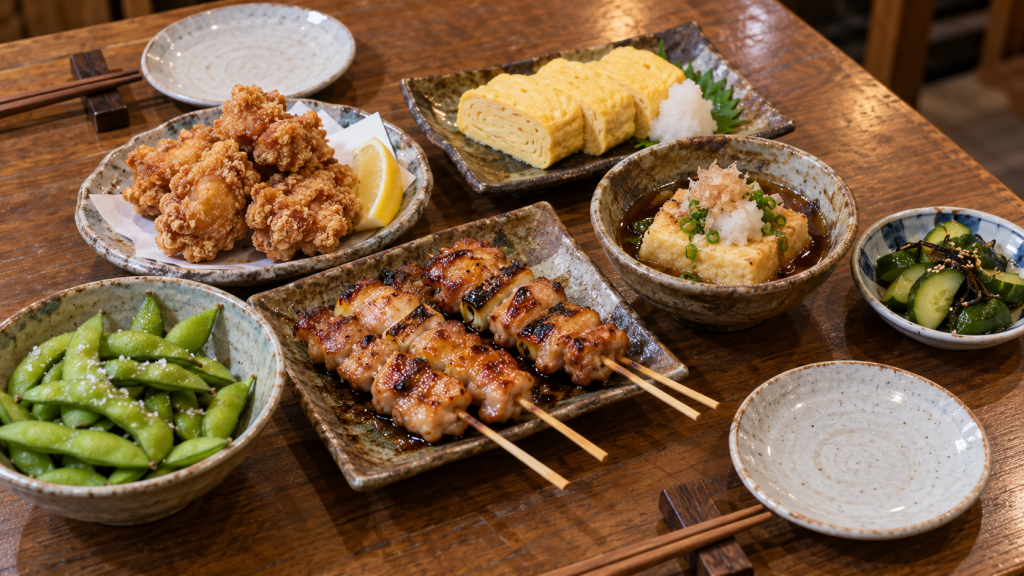
Menus vary between restaurants, but these dishes are useful names to recognize.
Edamame
Edamame are soybeans served in their pods, usually lightly salted. Eat the beans inside and leave the pods on a spare plate.
They make a simple snack while you wait for other dishes.
Yakitori
Yakitori are grilled chicken skewers. Different cuts are available, including thigh, breast, skin, and liver.
For something familiar, look for chicken thigh or negima, which combines chicken with pieces of Japanese leek.
You may be offered a choice of shio, meaning salt, or tare, meaning sauce.
Check the description before ordering an assorted platter, as it may include cuts you have not tried before.
Karaage
Karaage is Japanese fried chicken, often served with a wedge of lemon.
It is an easy option if you prefer cooked food and want something familiar to share.
Dashimaki Tamago
Dashimaki tamago is a soft Japanese rolled omelet made with dashi.
It has a gentle, savory flavor and is often served with grated daikon radish.
Agedashi Tofu
Agedashi tofu is lightly fried tofu served in a savory broth.
The outside has a delicate coating, while the inside stays soft. Toppings may include grated daikon, spring onion, and bonito flakes.
Sashimi
Sashimi is sliced raw seafood, often served as an assortment.
If you prefer cooked food, there are usually plenty of grilled and fried dishes to choose from instead.
Gyoza
Gyoza are filled dumplings, often pan-fried until the bottoms are crisp.
Fillings vary and may contain pork, vegetables, or seafood. Check before ordering if you have dietary requirements.
Tsukemono
Tsukemono are Japanese pickles, often served as a small side dish.
They can be a refreshing addition alongside richer grilled or fried food.
Ochazuke
Ochazuke is rice with tea or broth poured over it.
It is often enjoyed toward the end of a meal and may come with toppings such as salmon, seaweed, or pickled plum.
Yaki Onigiri
Yaki onigiri are grilled rice balls with a lightly crisp surface.
They are a good option if you would like something more filling after sharing smaller dishes.
A Simple First Order
For two people, you could start with edamame, chicken skewers, karaage, and a vegetable dish. Add rice or another dish later if you are still hungry.
This is a starting suggestion rather than a fixed portion guide. Dish sizes vary between restaurants.
Vegetable and tofu dishes are not automatically vegetarian. Dashi, bonito flakes, sauces, and shared cooking equipment may matter, so explain allergies and dietary requirements before ordering.
What Can You Drink at an Izakaya?
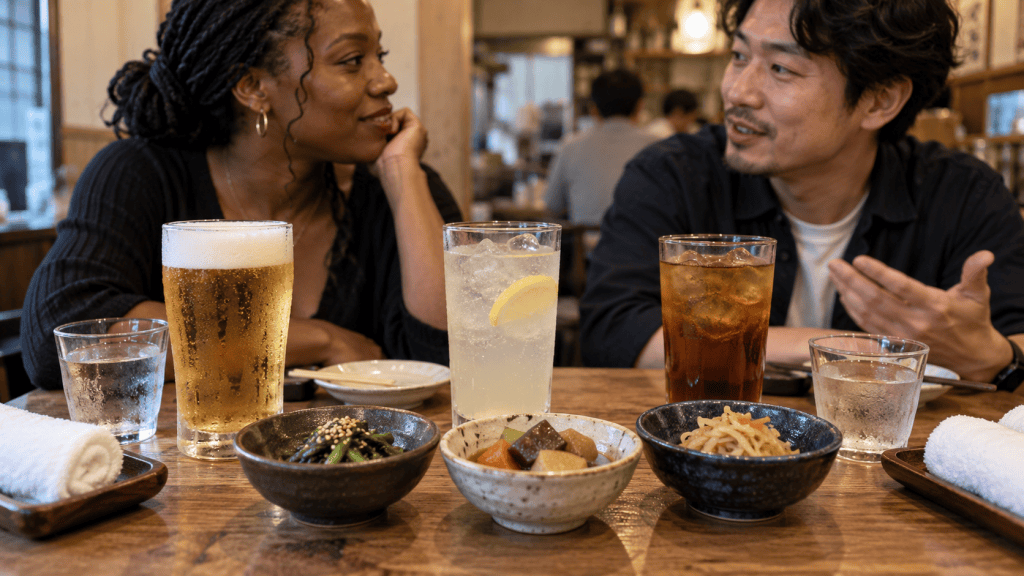
Common choices include draft beer, whisky highballs, lemon sours, sake, shochu, and umeshu.
Draft beer is often called nama beer. A highball usually combines whisky with soda, while a lemon sour is an alcoholic lemon-flavored drink.
Sake is a Japanese rice-based alcoholic drink. Shochu is a distilled spirit, and umeshu is a sweet plum-based alcoholic drink.
Sweet and fruity drinks can contain alcohol too, so check the menu if you are unsure.
If you prefer no alcohol, look for soft drinks such as oolong tea, juice, or soda. Confirm that a drink is alcohol-free rather than assuming from its appearance.
What Is Nomihodai?
Nomihodai means all-you-can-drink. You pay a set price to order from a specified drink list within a time limit.
Many izakaya offer this option, but it does not automatically include food.
Plans commonly run for around 90–120 minutes, although the restaurant’s own terms apply.
Check What Is Included
Before choosing a plan, confirm which drinks are included.
Draft beer, certain sake, or premium spirits may require a more expensive package. The regular drinks menu and the nomihodai menu may be different.
Check the Time Limit and Last Order
The last drink order may close before your seating time ends.
For example, a two-hour seating period does not necessarily mean you can keep ordering drinks until the final minute. Ask when the last order will be taken.
Check the Food and Group Requirements
Some plans require a food course or a minimum food order.
You should also ask whether everyone at the table must join and whether an alcohol-free plan is available for anyone who does not drink.
Check the Ordering Rules
Some venues ask you to finish your current drink before ordering another. There may also be charges for unfinished drinks.
Read the conditions or ask staff before starting.
Is Nomihodai Worth It?
Compare the package price with the drinks you actually want.
If you only want one drink, ordering individually may suit you better. If you prefer a relaxed dinner without a package time limit, ordering separately may also be more comfortable.
There is no need to drink more simply because you chose an all-you-can-drink plan.
What Is Otoshi?
Otoshi is a small appetizer served automatically at some izakaya, usually with a charge.
It might be a little bowl of vegetables, tofu, or another small dish that you did not specifically order.
Do not assume it is complimentary.
Why Is There a Charge?
The charge is commonly associated with taking a seat. It may appear on the bill as otoshi or as a seating-related charge.
Before sitting down, ask:
“Is there an otoshi or seating charge, and how much is it per person?”
Checking this at the start helps you understand the total cost of your visit.
Can You Refuse Otoshi?
Policies differ between restaurants.
Not eating the appetizer does not automatically remove the charge, and declining it may not waive a seating charge.
If you have an allergy or cannot eat the dish, tell staff before they serve it. Ask whether an alternative is available and whether the charge still applies.
Not every izakaya charges otoshi. A clearly explained appetizer or seating charge is also different from an unexpectedly inflated bill.
Alcohol Rules in Japan
You Must Be 20 or Older
Japan’s legal drinking age is 20, even though the age of adulthood is 18.
This applies to visitors too. Be prepared to show identification if asked.
Do Not Drive or Cycle After Drinking
Arrange a train, taxi, or walk back.
Japan’s drink-driving rules also cover bicycles. A rental bicycle is not a way around them.
Check Local Rules Before Drinking Outdoors
Do not assume you can drink everywhere outside.
Local restrictions and individual venue rules may apply, including restrictions in some public spaces. Check the rules for the area rather than relying on what other people are doing.
Respect Other Guests
Keep noise reasonable and avoid pressuring anyone to drink.
Ask before photographing staff or other diners, and check your last train before settling in for the evening.
You can enjoy an izakaya at your own pace, including with soft drinks.
Be Careful of Street Touts in Nightlife Districts
If someone approaches you on the street and offers to take you to a bar or restaurant, do not follow them.
These people are often called street touts, or kyakuhiki in Japanese.
Tokyo police warn that some touts lead visitors to establishments where excessive charges or unauthorized credit-card use occur.
Friendly conversation and promises of cheap drinks do not establish that a venue is trustworthy.
Choose Your Destination Yourself
Look up a restaurant independently and check its address, menu, and charges.
You can also ask your accommodation for help finding somewhere suitable.
If you already have a booking, go directly to the restaurant you booked.
You Do Not Need to Negotiate
A simple “No, thank you” is enough.
Keep walking rather than stopping to discuss the offer. If someone continues approaching you, move toward a busy, well-lit place.
Stay Aware During Your Night Out
Keep your drink in sight and stay aware of your belongings.
If a bill is unclear, ask for an itemized explanation and avoid escalating a confrontation.
If you feel threatened or face an emergency, call 110. A nearby police box, called a koban, can also help.
How to Order at an Izakaya
Depending on the restaurant, you may order through staff, a tablet, or a QR code.
Start with a drink and a few dishes. You can usually add more later, so there is no need to order everything immediately.
These simple Japanese phrases can help during your visit.
Sumimasen
“Excuse me.”
Use this to get a staff member’s attention.
Eigo no Menu wa Arimasu ka?
“Do you have an English menu?”
Some restaurants also have picture menus or multilingual ordering screens.
Kore o Hitotsu Onegaishimasu
“One of this, please.”
You can point to an item on the menu while saying this.
Mizu o Onegaishimasu
“Water, please.”
Okaikei Onegaishimasu
“The bill, please.”
Paying the Bill
Before paying, check the food, drinks, and any stated charges.
Ask whether payment is at the table or register. If you want to pay separately, check whether the restaurant allows it rather than assuming the bill can be split.
Payment methods vary, so it is useful to confirm whether cards are accepted before ordering.
Frequently Asked Questions
Can I Visit an Izakaya Without Drinking Alcohol?
Often, yes. Order a soft drink, but check any minimum drink order or package rules before sitting down.
Is Nomihodai the Same as All-You-Can-Eat?
No. All-you-can-eat is called tabehodai.
A drinks package only includes food when explicitly stated.
Do I Need a Reservation?
For a particular restaurant, a larger group, or a busy evening, booking ahead can make planning easier.
Check the restaurant’s own booking conditions, including cancellation rules and seating time limits.
Is Otoshi a Scam?
An explained appetizer or seating charge is a normal practice at many izakaya.
Ask the amount before sitting down and question charges you do not understand.
What Should I Order If I Do Not Eat Raw Fish?
Look for cooked options such as chicken skewers, karaage, gyoza, rolled omelet, and grilled rice balls.
Check ingredients and preparation methods if you have allergies or dietary restrictions.
Enjoy Your First Izakaya Visit
You do not need to know every dish or order alcohol to enjoy an izakaya.
Choose a place yourself, check the charges, and start with a few dishes that appeal to you. Understanding otoshi and nomihodai before you go can make the evening feel much more relaxed.
Whether you choose grilled skewers and beer or comfort food and oolong tea, an izakaya can be a memorable part of your Japan trip.


Leave a Reply