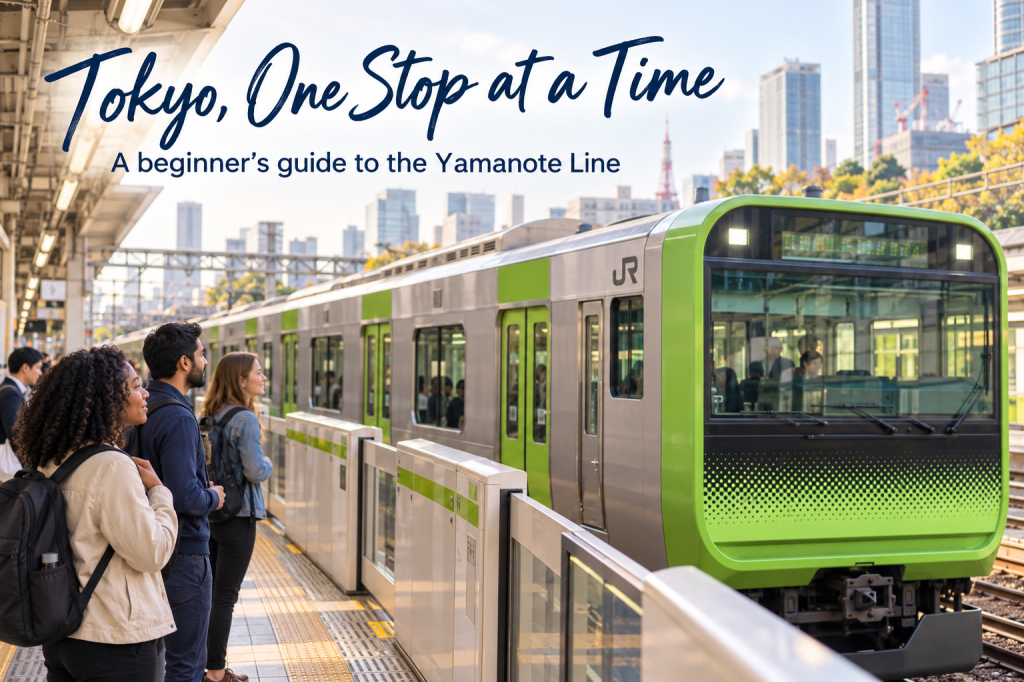
The Yamanote Line is a JR East loop line connecting many of Tokyo’s best-known neighbourhoods, including Shinjuku, Shibuya, Harajuku, Ueno, Akihabara and Tokyo Station.
For a first visit, it is a useful way to explore several areas without changing trains. You can use a compatible IC card such as Suica or PASMO, or buy a suitable train ticket.
You do not need to ride the whole loop or visit every stop. Pick two or three neighbourhoods, check the direction and leave time to explore.
What Is the Yamanote Line?
The Yamanote Line links 30 stations around central Tokyo. Look for the light-green line colour and the station-numbering code JY.
It is operated by JR East. It is not a Tokyo Metro or Toei Subway line, even though you may find their entrances in the same station complex.
That distinction matters when choosing tickets and following signs. A station name alone does not tell you which railway entrance to use.
For the current network, use the official JR East route maps.
How to Ride the Yamanote Line
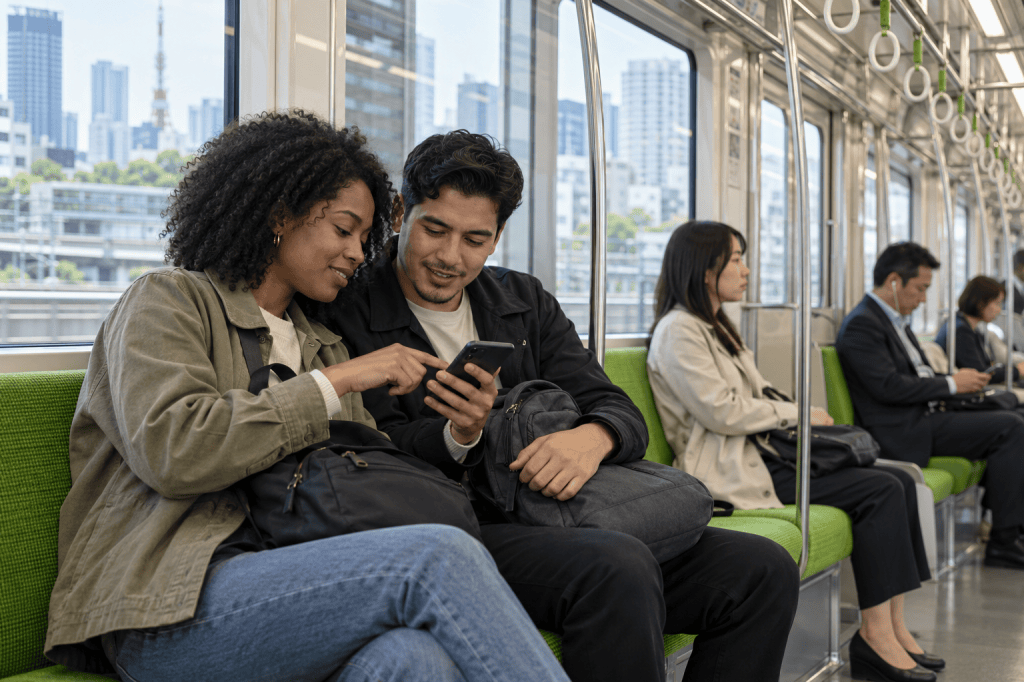
1. Find the JR Entrance
Follow signs for JR Lines, then look for Yamanote Line or JY. Large stations may have several entrances serving different operators.
Before entering, check your destination and route on a journey-planning app.
2. Use Your IC Card or Ticket
With a compatible IC card such as Suica or PASMO, tap the reader at the gate when entering and use the same card again when leaving. The fare is deducted from the balance.
Each fare-paying passenger needs their own valid ticket or suitable card. If the gate does not open, stop and ask staff rather than following someone through.
For a paper ticket, check the fare to your destination and follow the ticket gate instructions. Keep the ticket for the exit.
3. Check the Direction
Look at the platform signs and departure display. Confirm that your destination is in the direction shown.
Do not follow another passenger just because they are boarding a green train.
4. Board and Watch the Next-Stop Display
Let passengers off first, then board. Keep bags out of the way and watch the onboard display as you approach your station.
Check the station exit for your destination before leaving. Choosing the right exit can save a surprising amount of walking.
Inner Loop or Outer Loop: Which Direction Should You Take?
Yamanote trains run around the loop in two directions:
- Outer loop: clockwise, called sotomawari.
- Inner loop: counterclockwise, called uchimawari.
You do not need to memorise the Japanese names. Use the destinations on the platform signs together with your route app.
For example, from Harajuku, the clockwise direction heads toward Shinjuku and Ikebukuro; the opposite direction heads toward Shibuya and Shinagawa.
If your destination is far around the loop, another line or a transfer may be quicker. The Yamanote Line is convenient, but it is not always the fastest route.
Useful Yamanote Line Stops for Sightseeing
Tokyo Station: Architecture and Your Next Journey
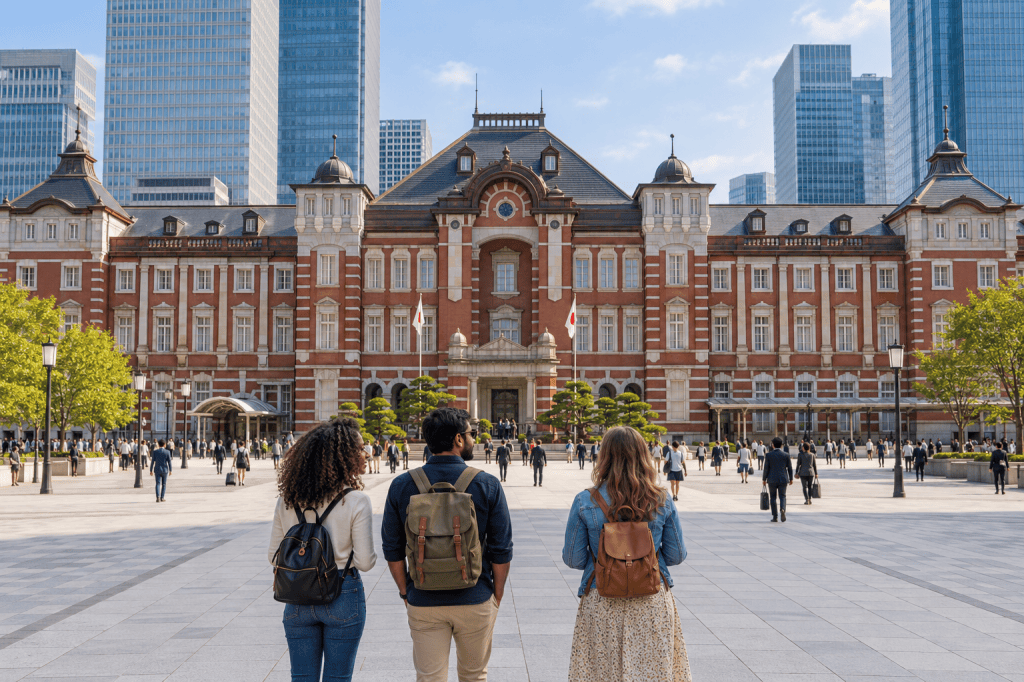
Leave through the Marunouchi side to see the red-brick station building. Allow time to enjoy the surrounding area rather than treating Tokyo Station only as a place to transfer.
The Shinkansen uses separate services and boarding arrangements; it is not part of an ordinary Yamanote journey.
Akihabara: Anime, Games and Electronics
Akihabara is a good stop for browsing anime shops, games and electronics. Choose a few shops that match your interests rather than trying to cover everything.
Ueno works well as another stop on the same outing.
Ueno: Parks and Museums
Ueno offers park space and museums, with Ueno Zoo nearby. Choose an activity that fits the time you have, and check individual opening days.
It is a useful change of pace after a busy shopping district.
Ikebukuro: Shopping and Entertainment
Ikebukuro is worth considering for shopping, food and the Sunshine City area.
Check the exact location of your destination before leaving the station; not everything is immediately outside the gate.
Shinjuku: Big-City Tokyo
Shinjuku has plenty of shopping and dining options. The station is large, so decide where you are going before choosing an exit.
For a first visit, leave extra time rather than scheduling a tight connection between sightseeing and dinner.
Harajuku: Shopping Streets and a Wooded Shrine Approach
Use Harajuku for Takeshita Street and access to the Meiji Jingu area.
The contrast is part of the appeal: busy shops on one side and a quieter wooded approach on the other. Both still involve walking.
Shibuya: The Crossing and the Streets Beyond
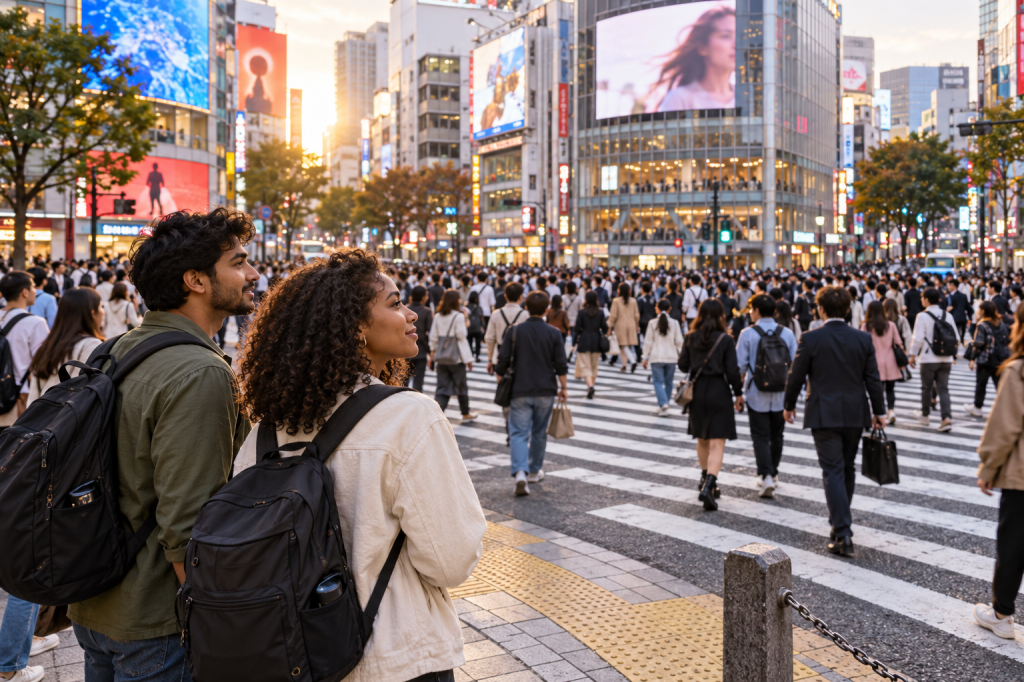
See the famous crossing, then explore the surrounding shops and cafés.
Harajuku is one Yamanote stop away, making the two easy to combine. You do not need to walk between them if you would rather save your energy.
Shinagawa: A Useful Connection
Shinagawa is useful for connections to other rail services, including the Tokaido Shinkansen and Keikyu services toward Haneda Airport.
Check the operator, ticket and platform for your onward journey rather than assuming you can remain on the same train.
Can You Use Suica on the Yamanote Line?
Yes. Suica and compatible cards such as PASMO can be used for ordinary Yamanote Line journeys.
A Suica balance pays for rides; it does not automatically give you unlimited travel. If you leave the paid area to explore and later enter again, that is normally another journey.
If you are continuing beyond Tokyo, read my guide to using Suica in Kyoto and Osaka.
Does the Tokyo Subway Ticket Cover the Yamanote Line?
No. The Tokyo Subway Ticket covers Tokyo Metro and Toei Subway services, not JR East’s Yamanote Line.
You need a valid JR ticket, a compatible IC card balance or a pass that specifically covers the journey.
Do not confuse the Tokyo Subway Ticket with other similarly named Tokyo passes. Check each product’s coverage before buying.
If most of your planned journeys use the Yamanote Line, a subway-only pass may not fit your itinerary.
Where Can’t You Go Directly on the Yamanote Line?
The Yamanote Line is useful, but it does not serve every Tokyo attraction directly.
Asakusa, Tokyo Skytree, Toyosu and Odaiba are not Yamanote Line stops. You will need another service and, depending on the destination, a walk.
Narita and Haneda airports are not on the loop either. Plan your airport connection separately.
Check the route to the actual attraction, not just the neighbourhood name.
An Easy Way to Plan a Day
Choose a small group of stops with a shared purpose:
- Ueno and Akihabara for museums, park time and pop culture.
- Shinjuku, Harajuku and Shibuya for shopping and city streets.
- Tokyo Station and one neighbourhood you are especially excited to explore.
These are suggestions, not a requirement to complete every stop.
Travelling with children? My flexible three-day Tokyo family itinerary includes breaks and optional stops.
When Is the Yamanote Line Busiest?
If your schedule is flexible, try to avoid weekday commuter rush hours. As a general Tokyo travel planning guide, the busiest periods are approximately:
- Morning: 7:30–9:30 am.
- Evening: 5:30–7:30 pm.
The morning rush is usually more concentrated. Crowding varies by station, direction and day, so these are planning guidelines rather than exact cut-off times.
For sightseeing, starting your train journeys after 10 am on weekdays can make travel more comfortable, especially with children, a stroller or large luggage.
Weekends and public holidays do not follow the same office-commuter pattern, but popular shopping and sightseeing areas can still be busy. Allow extra time and do not assume an off-peak journey guarantees a seat.
Common Mistakes to Avoid
Check the direction before boarding, use the correct railway entrance and confirm the exit for your destination.
Do not assume trains run all night. Check the timetable for your travel date, especially for a late return or an early airport journey.
If you want to ride around the loop and return to the same station, ask station staff about the appropriate ticket and fare first. Do not assume a normal IC-card journey permits an unrestricted sightseeing circuit.
For disruptions, check JR East’s official train status information.
The Yamanote Line becomes easier once you have used it a few times. Choose your next stop, check the direction and give yourself time to enjoy what is outside the station.


Leave a Reply