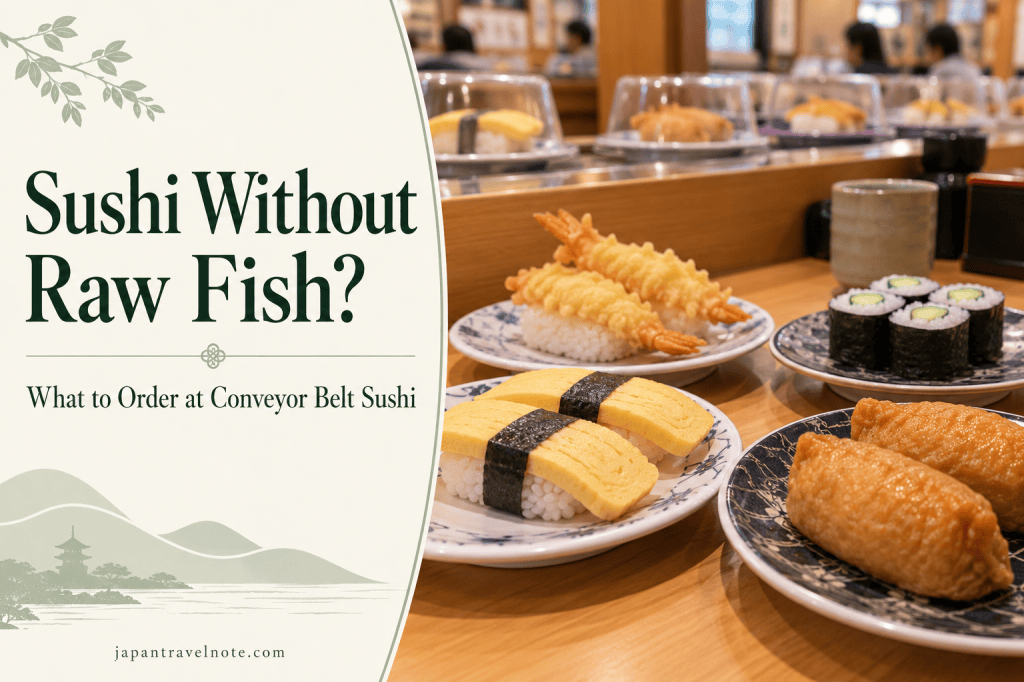
Your travel companion wants sushi, but raw fish is not really your thing. Does that mean you have to sit there with a cup of tea while everyone else eats?
Not necessarily.
At Japan’s major conveyor belt sushi chains, there is more to the menu than raw tuna and salmon. Depending on the restaurant, you can choose egg sushi, tofu pockets, cooked seafood, meat toppings, noodles, fried dishes and desserts.
As someone from Japan, I would encourage you to look through the whole menu before deciding that a sushi restaurant is not for you.
Here are some options to look for, with examples from official chain menus. Availability and recipes vary by branch and season, so check the menu where you are eating.
1. Tamago: Japanese Egg Omelet Sushi
Tamago sushi has a slice of cooked Japanese omelet on sushi rice. The omelet is often a little sweet, making it quite different from a plain breakfast egg.
It is a familiar place to start if you want to try sushi without raw fish.
Hama Sushi lists egg nigiri on its menu. I would order one plate first and see how you like the combination of egg and vinegared rice.
2. Inari: Rice in a Sweet Tofu Pocket
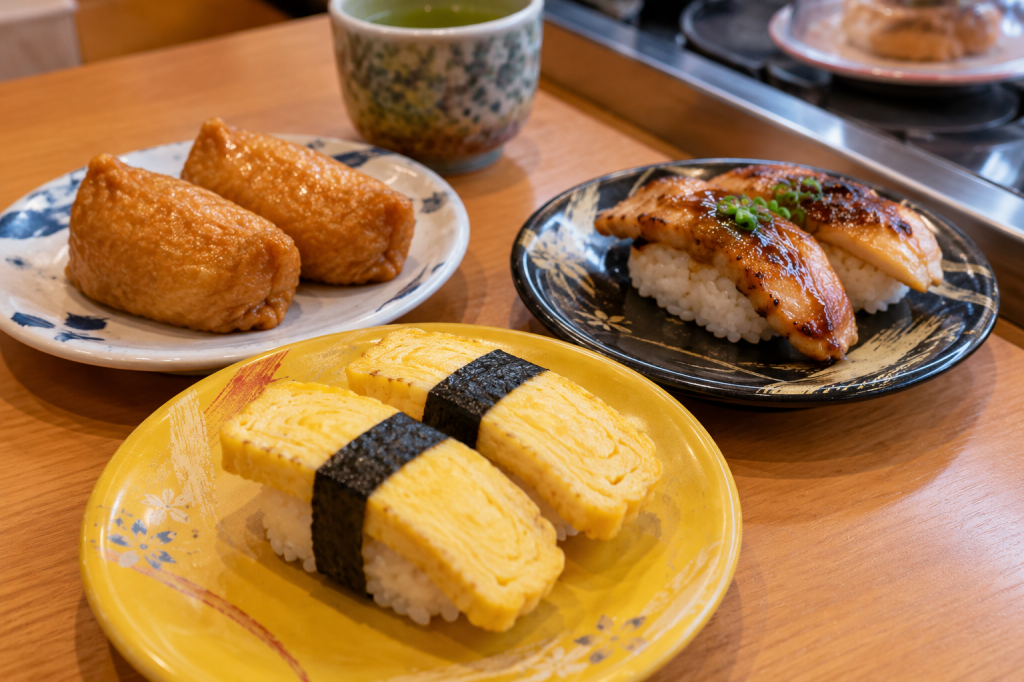
Inari sushi is rice tucked inside a seasoned fried-tofu pouch. It has a soft texture and a sweet-savoury flavour.
Sushiro lists it as fried bean curd on its English menu.
It is a useful option when you want something without a fish topping. However, if you also avoid all seafood or animal ingredients, check the seasoning rather than assuming that a tofu-based item is automatically vegetarian or vegan.
3. Cooked Seafood: Look for Clear Descriptions
Avoiding raw fish does not necessarily mean avoiding every seafood dish.
Sushiro’s English menu includes boiled octopus and boiled conger eel. These give you a different way to try seafood with sushi rice.
If you prefer something crisp, look for shrimp-tempura nigiri. Hama Sushi lists tempura sushi options on its official menu.
Read the description carefully. Shrimp is available in both raw and cooked preparations, so the word “shrimp” on its own does not tell you enough.
For a first visit, I would choose an item clearly described as boiled, cooked or tempura, and ask staff if the preparation is unclear.
4. Meat-Topped Sushi
If you enjoy meat, check this part of the menu too.
Examples include Sushiro’s grilled chicken sushi and Hama Sushi’s flame-grilled beef kalbi and hamburger-style nigiri.
The combination of meat, sauce and sushi rice may feel more familiar than a raw-fish topping.
I would still check the item description rather than treating every meat topping as fully cooked. Roast beef, cured meat and a grilled-looking photograph do not necessarily match what you are looking for.
5. Cucumber Rolls, Corn Gunkan and Other Small Options
For a simple roll, look for kappa maki: cucumber wrapped in rice and seaweed.
Hama Sushi also lists pickled-radish and natto rolls. Natto is fermented soybean, with a distinctive flavour and sticky texture, so it may be more adventurous than cucumber.
Another option is corn gunkan, listed on Sushiro’s menu. Gunkan is a small portion of rice surrounded by a strip of seaweed, with the topping placed on top.
Check sauces and added ingredients if those matter to you.
Also, do not assume every roll avoids raw fish. Tekka maki is a tuna roll, and mixed rolls may contain seafood even when other fillings are visible.
6. Side Dishes: You Can Build a Meal Around Them
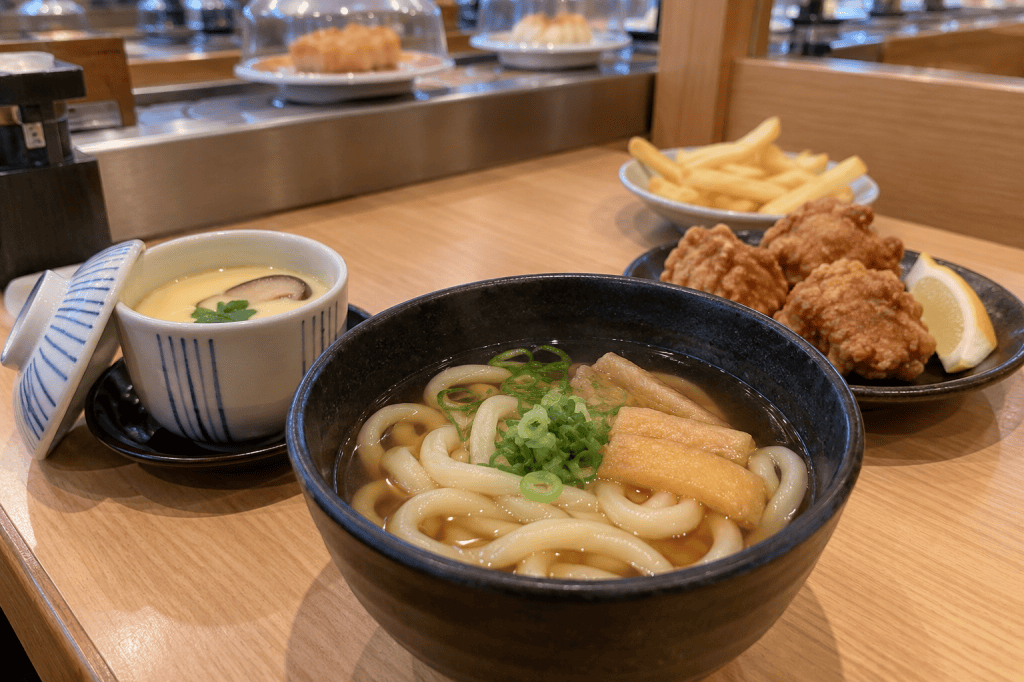
You do not have to make every part of your meal sushi.
Udon and Other Noodles
A bowl of udon can be a comfortable choice if you prefer a warm meal. Depending on the chain, you may also find ramen or soba.
Hama Sushi lists plain udon and several other noodle dishes, while Sushiro’s English menu includes kitsune udon.
Check the broth and toppings if you avoid seafood altogether. A noodle dish without a visible fish topping may still use fish-based stock.
Karaage and Fries
Hama Sushi lists chicken karaage and crispy potatoes. These are worth looking for if you want something familiar alongside one or two sushi plates.
You could share a fried side dish with your companion, or order it with noodles as your main meal.
Chawanmushi
Chawanmushi is a savoury steamed egg custard, usually served in a small cup.
Its texture is soft and smooth, rather than like a fried omelet. Hama Sushi lists a version made with bonito stock.
The ingredients inside can vary, so check the filling if you dislike particular seafood. It is cooked, but it is not necessarily seafood-free.
Soup and Small Sides
Depending on the menu, you may also find miso soup, edamame or an egg side dish.
These can fill out a meal when you only want a few plates of sushi. There is no need to order something you do not enjoy simply because the people beside you are eating it.
7. Desserts: Leave a Little Room
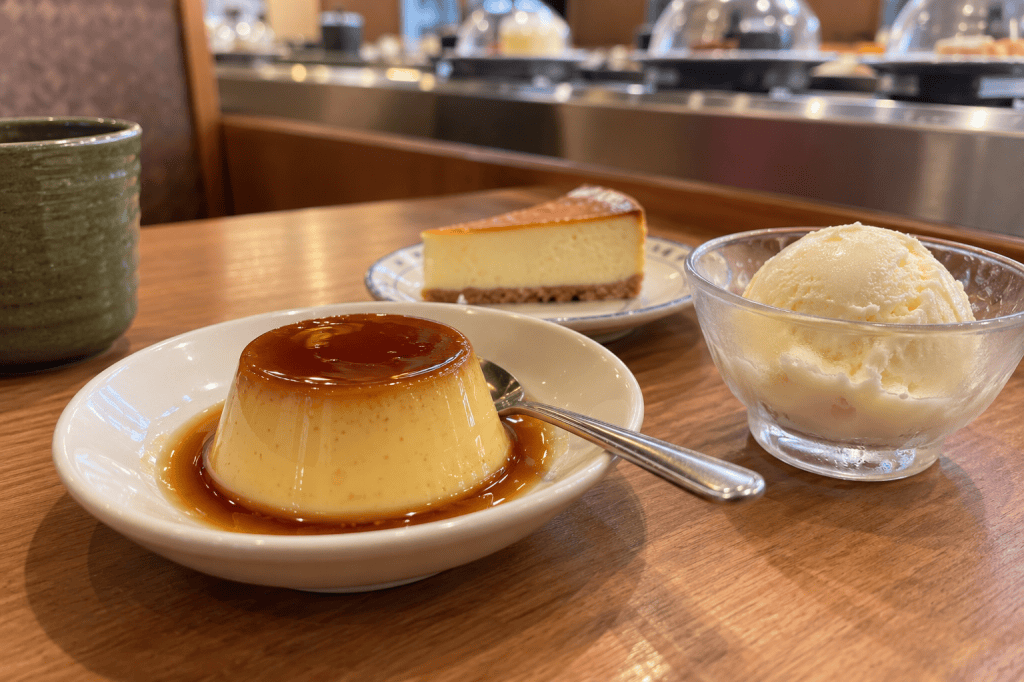
Yes, dessert is part of the experience too.
Sushiro’s official English menu lists options such as pudding, vanilla ice cream and a crème-brûlée-style dessert.
Other chains offer their own sweets, including seasonal cakes and parfaits.
Have a look at the dessert section before placing your last savoury order. I would choose one small dessert rather than assuming I need to try everything.
The available choices can change, so treat menu photographs online as examples rather than a guarantee.
Be Careful with Seared and Marinated Fish
This is the main detail I would remember:
Seared fish can still be raw inside.
Aburi often means that the surface has been seared. A browned topping, melted cheese or mayonnaise does not prove that the fish underneath is fully cooked.
Marinated fish is not necessarily cooked either.
If you want to avoid raw fish completely, choose a clearly cooked preparation or ask staff to confirm. This guide is about menu preferences, not a guarantee for allergies or medical dietary needs.
A Simple First Order
Based on the menu available, you could start with:
- One plate of tamago or inari.
- One plate of cucumber rolls, cooked seafood or grilled chicken.
- A bowl of udon or a small fried side.
- A pudding or ice cream if you still have room.
This is just a starting point. Order a little at a time and add more according to your appetite.
If you are unsure how the screens, delivery lanes or checkout work, read my guide to ordering conveyor belt sushi in Japan.
You Can Enjoy the Meal Together
Your companion can order the sushi they love, while you choose the dishes that appeal to you.
For me, that is one of the useful things about this style of restaurant: each person can build their own meal.
You do not need to learn to love raw fish to enjoy going out for sushi in Japan.


Leave a Reply