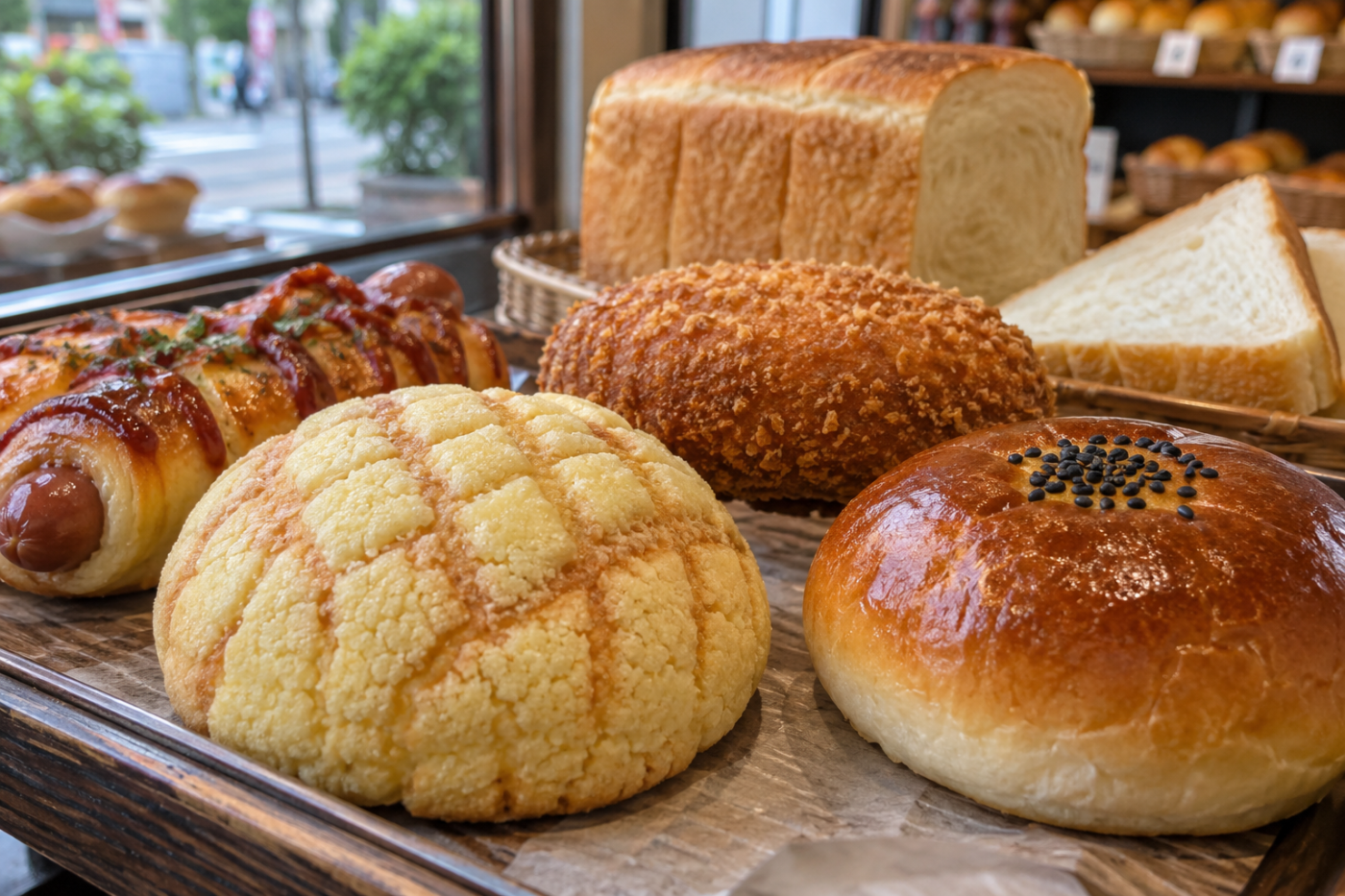
When you hear the word bakery, what do you picture in your country? Sandwiches? French baguettes? Sourdough bread? Pies? Cakes and cookies?
You might imagine something quite different from what you’d find in Japan.
Do you think Japanese people eat rice all the time? Rice is certainly a staple for us, but bread is more popular in Japan than you might think. So today, I want to show you what a Japanese bakery is like—and which breads you might want to try.
A Bakery for Everyone
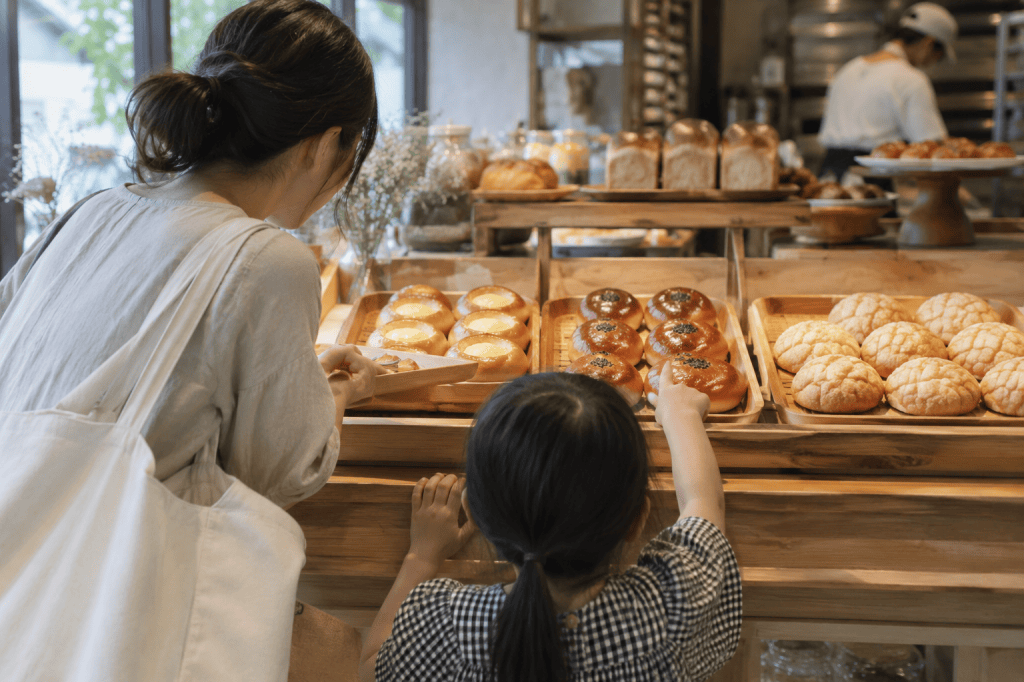
From choosing their favorite bread to spotting a cute animal-shaped bun, a trip to the bakery can make a child’s day.
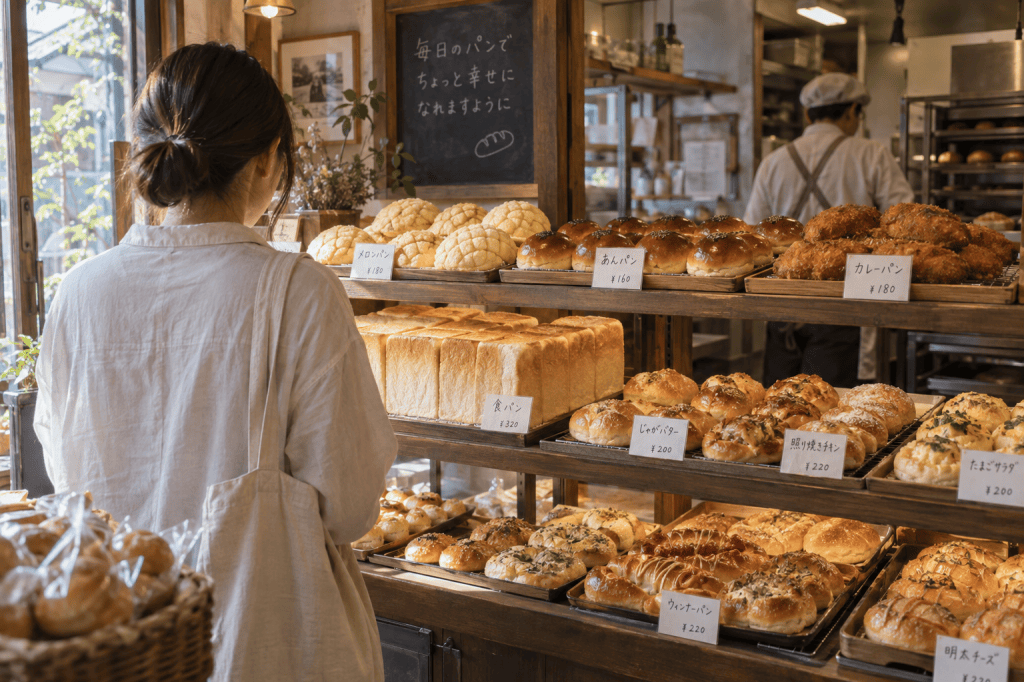
I think one of the nicest things about Japanese bakeries is that they appeal to all ages. Children might head straight for a sweet bun or a sausage bread. Adults might pick up a loaf for breakfast, a savory bread for lunch, and then somehow leave with a little dessert as well.
There’s usually plenty to look at. Sweet breads sit alongside breads filled with curry, cheese or other savory ingredients. Some shops have a few familiar favorites; others seem to have something new every time you visit.
That’s why “I’ll just buy one” can be a difficult promise to keep.
Sweet Bread and Savory Bread
In Japan, sweet bread is often called kashi pan. Think of soft buns filled with red bean paste or custard, or topped with a sweet cookie-like crust.
Savory bread is often called sōzai pan. It might have curry inside, a sausage on top, or another filling that makes it feel more like a small meal.
Of course, every bakery makes its own versions. Even when two shops sell the same kind of bread, the texture, filling and flavor can be different. Personally, that’s part of the fun of trying a new bakery.
Popular Breads You’ll Often See
If you walk into a Japanese bakery and don’t know where to start, these are some familiar choices.
Melon Pan
Melon pan is a soft bun covered with a sweet, lightly crisp layer that looks a little like the surface of a melon. The classic version usually doesn’t taste like melon, though some bakeries do make melon-flavored ones.
It’s a good choice if you want something sweet without a filling.
Anpan
Anpan is a soft bun filled with sweet red bean paste, called anko. It’s one of Japan’s best-known sweet breads.
If red bean paste is new to you, give it a try. It’s sweet, but it has a different flavor from chocolate or custard.
Cream Pan
Cream pan has custard cream inside. It’s soft, comforting and easy to like—especially if you’re choosing a treat for a child.
Curry Pan
Curry pan is a savory bun filled with Japanese curry. Many versions are coated in breadcrumbs and fried, giving them a crisp outside and a soft, flavorful center.
This is the bread I’d suggest if you want to try something that feels especially Japanese.
Sausage Bread
This one is quite straightforward: a sausage baked into or placed on top of a soft bread roll. Depending on the bakery, you might also find cheese, ketchup or other toppings.
It’s a handy option when you want a quick savory snack.
Yakisoba Pan
Yes, this is bread filled with noodles! Yakisoba pan is a soft roll stuffed with Japanese stir-fried noodles. It sounds unusual if you haven’t seen it before, but it’s a familiar bakery and convenience store food in Japan.
It’s filling, a little messy to eat, and definitely worth trying if you’re curious.
Shokupan
Shokupan is the thick, fluffy white bread you’ll often see sold as a loaf. It may look simple beside the filled buns, but good shokupan is lovely on its own or toasted with butter.
If you have somewhere to prepare breakfast during your trip, picking up a loaf from a local bakery could be a nice idea.
Made One by One
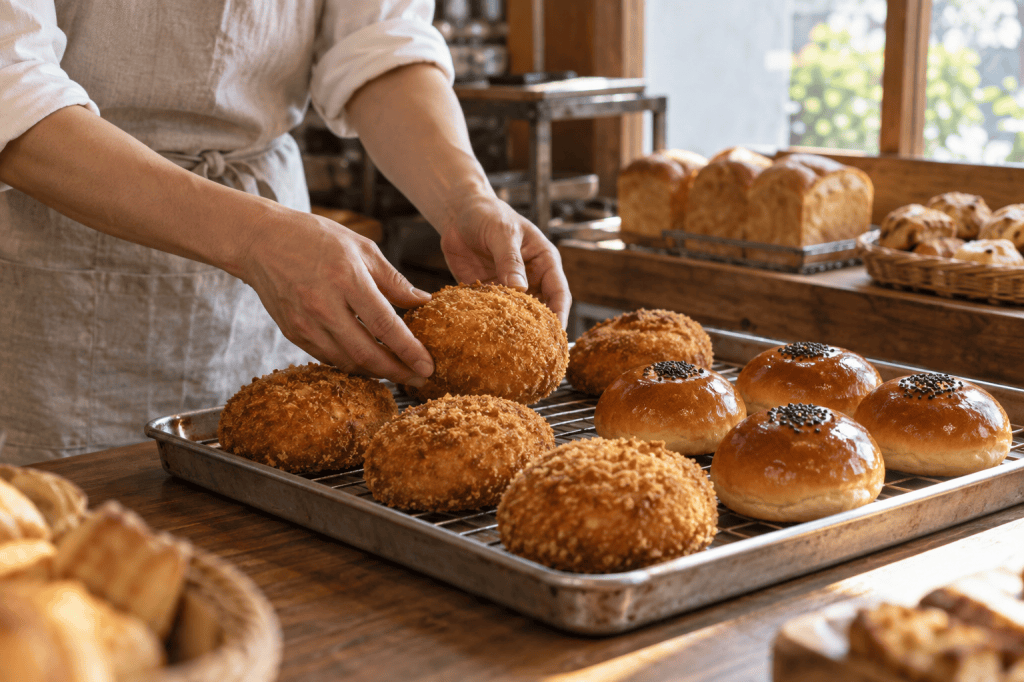
Watching the bread come out is part of the pleasure of visiting a neighborhood bakery.
Another thing I appreciate is the care you can see in the display. Buns are shaped, filled and finished individually. You might notice a neatly folded edge on a curry pan, a shiny glaze on anpan, or a carefully cut pattern on melon pan.
That doesn’t mean every bakery makes everything in exactly the same way. In fact, I like finding out how one shop’s version compares with another’s. You may discover that your favorite melon pan comes from a tiny bakery you happened to pass on a walk.
How to Choose Your First Bread
If you like sweets, start with melon pan, anpan or cream pan. If you want something for lunch, try curry pan or a sausage bread. And if you want a bread to take back for breakfast, look for shokupan.
Or do what I often want to do: choose one savory bread and one sweet bread. That way, you get a better feel for the bakery without having to make an impossible decision.
Japanese bakeries are a small, everyday pleasure. They’re a place to pick up breakfast, find a quick lunch or bring home a treat for someone else. If you spot one during your Japan trip, step inside and see what’s on the shelves. You might find a new favorite.


Leave a comment