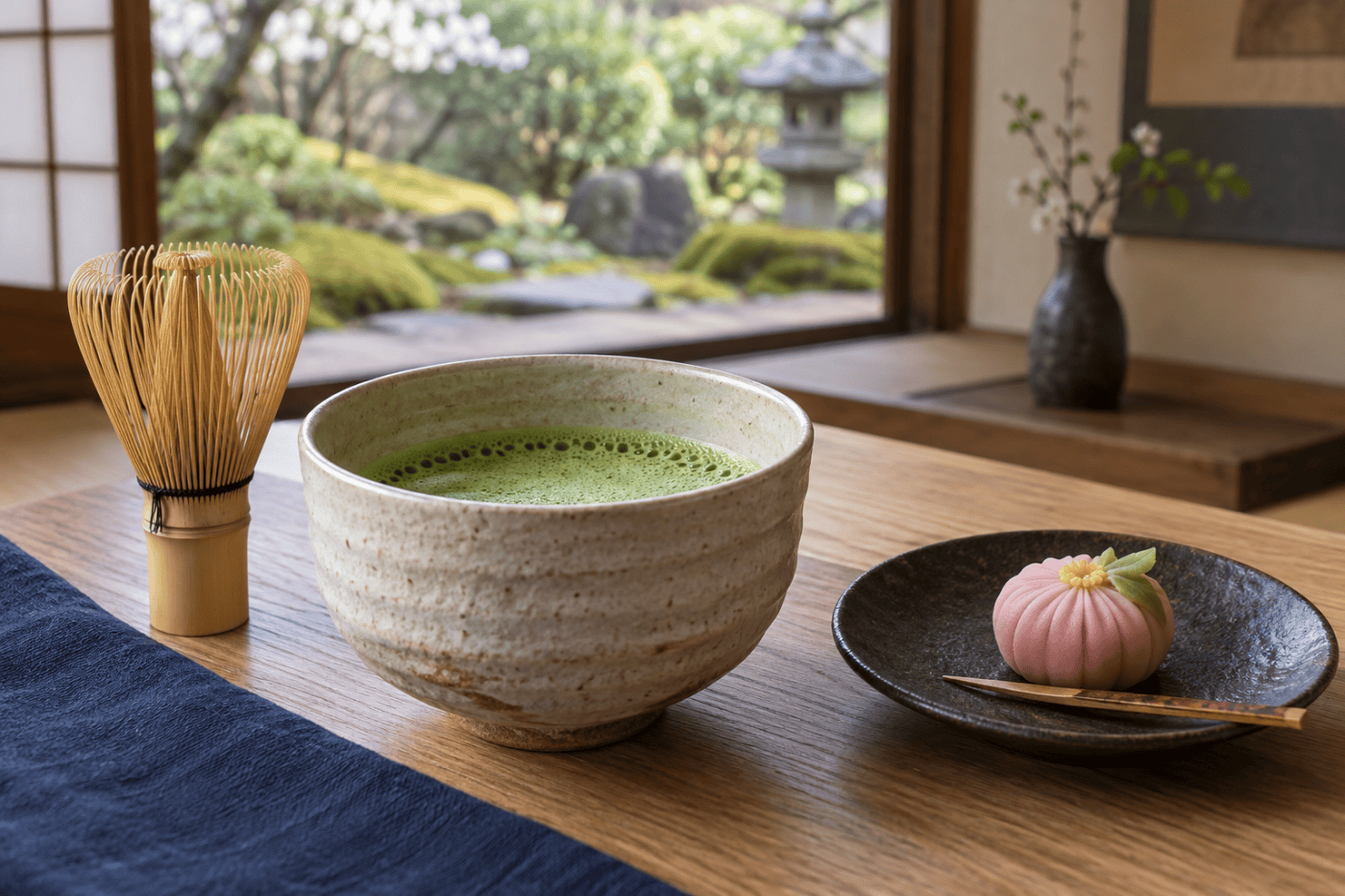
You’ve probably seen matcha in lattes, ice cream and beautifully layered desserts. But a bowl of traditional Japanese matcha is a rather different experience.
There’s no syrup or whipped cream—just finely ground tea and water, with a rich green color and a flavor that can be grassy, gently bitter and pleasantly savory.
Personally, I think learning a little about matcha makes that first bowl more interesting. You start noticing the tea, the bowl and even the way it is served.
So, what makes matcha different from other tea? And is it really as healthy as people say?
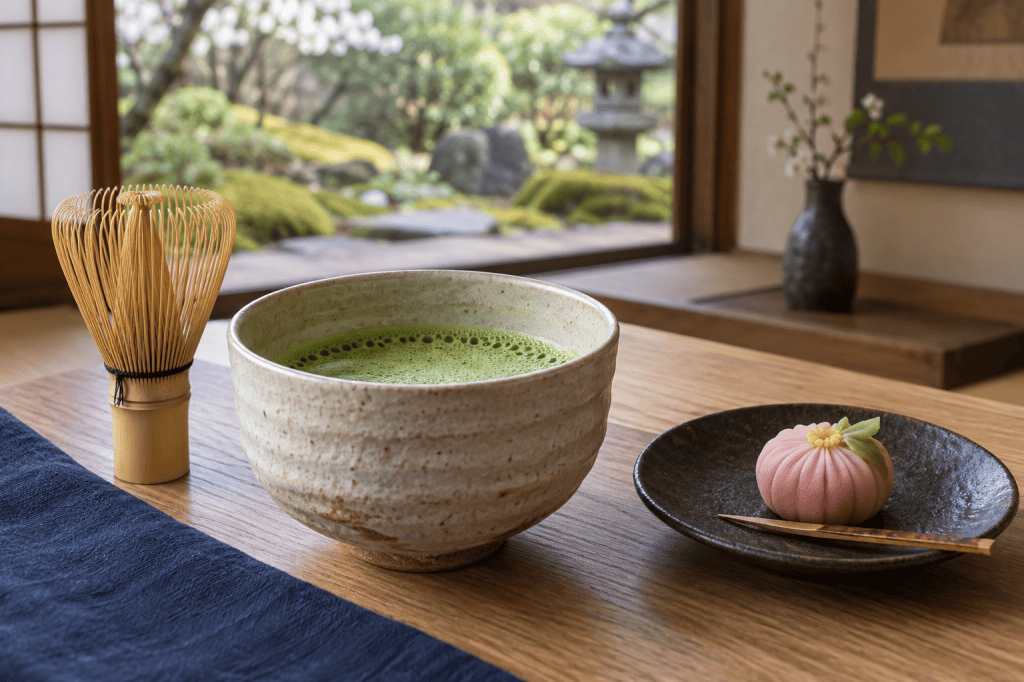
A bowl of matcha paired with a traditional Japanese sweet. AI-generated illustration
What Is Matcha?
Matcha is a finely powdered Japanese green tea made from tea leaves processed into tencha.
The plants are shaded before harvesting. After the leaves are steamed and dried, stems and veins are removed before the remaining leaf material is finely ground.
To prepare matcha, you mix the powder directly into water, usually with a bamboo whisk called a chasen.
That means you drink the powdered leaf itself, rather than simply drinking water that tea leaves have steeped in.
Its flavor varies. Some matcha tastes quite bitter, while others have a softer, fuller flavor with noticeable umami. The tea you choose and how you prepare it both make a difference.
A Little History Behind the Green Bowl
Matcha’s story begins with the tradition of powdered tea in China.
Tea had already reached Japan before the monk Eisai returned from China in the late twelfth century. He helped promote tea cultivation and drinking, and powdered tea became closely associated with Zen Buddhist culture.
Over the following centuries, preparing and sharing tea developed into a Japanese cultural practice.
In the sixteenth century, Sen no Rikyū helped shape the tea tradition associated with simplicity, thoughtful hospitality and attention to the moment. His influence remains central to Japanese tea ceremony today. Learn about Japanese tea ceremony.
Today, matcha belongs to both traditional tea culture and everyday café life. A carefully prepared bowl in a tea room and an iced matcha latte are different experiences, but both show how this tea continues to evolve.
Matcha vs. Regular Green Tea
Actually, matcha is green tea too.
In Japanese, ocha simply means tea. In everyday conversation, it often refers to a familiar green tea such as sencha, but it doesn’t describe just one variety.
The main difference is how the tea is grown, processed and prepared.
Matcha
Sencha
Form
Fine powder
Loose leaves or tea bags
Preparation
Whisked into water
Steeped in water, then separated from the leaves
Appearance
Opaque green, sometimes with foam
Usually clear yellow-green
Flavor
Often fuller, with umami and some bitterness
Often fresh, grassy and lightly astringent
What you drink
Water and powdered leaf
An infusion of the leaves
Neither has to be your favorite. You might enjoy sencha with lunch and matcha during a quiet afternoon break.
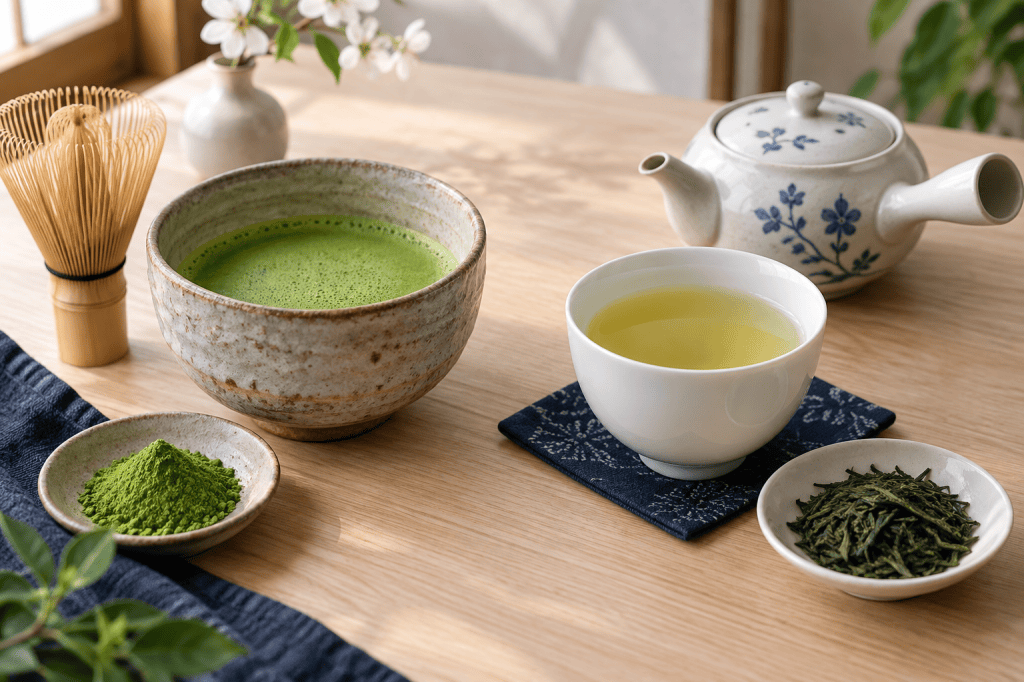
Whisked matcha on the left and brewed sencha on the right. AI-generated illustration.
Do You Need to Know Tea Ceremony Rules?
Well, you don’t need to become a tea expert before enjoying matcha.
At a café, you can simply drink it as you would another hot drink. A formal tea ceremony has more structure, but a beginner-friendly experience should include guidance.
For a simple serving of thin tea, or usucha, you will commonly be asked to:
- Enjoy the Japanese sweet before drinking the tea, following your host’s timing.
- Acknowledge the host with a small bow.
- Support the bowl on your left palm and steady it with your right hand.
- Turn the bowl slightly so you avoid drinking from its front.
- Drink, then follow your host’s instructions for returning the bowl.
The details vary between tea schools and settings, so follow your host rather than worrying about a fixed number of turns or sips. More about receiving tea.
Personally, I’d focus on being attentive and appreciative. The experience should give you a moment to slow down, rather than feel like a test.
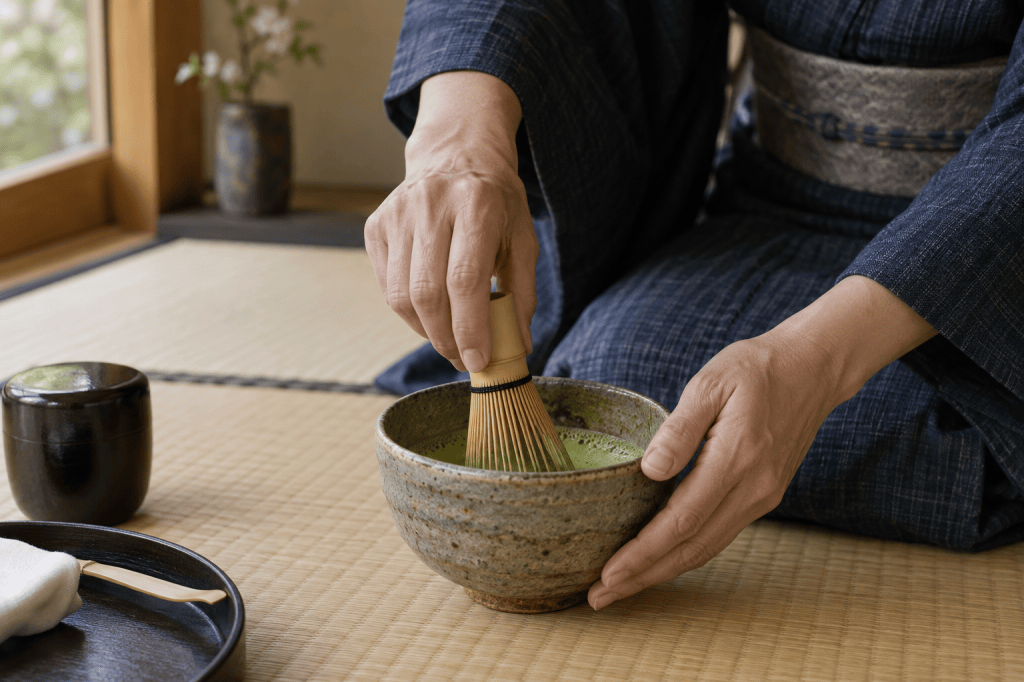
Preparing matcha with a bamboo whisk called a chasen. AI-generated illustration.
Is Matcha Good for You?
Matcha can fit into a balanced diet, especially when enjoyed without lots of added sugar. But the health claims can sometimes get ahead of the evidence.
It Contains Tea Compounds Such as Catechins
Green tea contains catechins, including EGCG, which have antioxidant properties.
That sounds promising, but finding antioxidants in a drink doesn’t automatically prove that drinking it prevents illness. Research on green tea has produced mixed results for many advertised health benefits. NCCIH’s overview of green tea research.
Caffeine Can Help You Feel More Alert
Matcha contains caffeine, so it can give you a lift when you feel sleepy.
But it isn’t caffeine-free simply because it looks calming or is served in a peaceful tea room. Your response depends partly on how much you drink and how sensitive you are to caffeine. FDA guidance on caffeine.
The Bigger Health Claims Need Perspective
Some studies of green tea products have found small improvements in cholesterol. However, much of that research involves extracts, rather than an ordinary bowl of matcha.
We shouldn’t assume that all findings about green tea supplements apply directly to matcha. It also isn’t a proven shortcut for weight loss, detoxing or preventing cancer. What the research can—and cannot—tell us.
I’d think of matcha as a drink to enjoy, with potentially useful compounds, rather than something you need to drink for your health.
Can You Have Too Much Matcha?
Yes, particularly because of the caffeine.
The amount depends on the powder and how much is used. A large latte isn’t necessarily stronger than a small traditional bowl—the amount of matcha matters more than the amount of water or milk.
For most adults, the FDA cites 400 mg of caffeine per day from all sources as an amount not generally associated with negative effects. That is not a target, and some people experience problems at much lower amounts.
Too much may cause difficulty sleeping, jitteriness, anxiety, a racing heartbeat or an upset stomach. If you are pregnant, breastfeeding, taking medication or sensitive to caffeine, ask a health professional about an appropriate limit. FDA caffeine advice.
A few practical habits can help:
- Check caffeine information when it is available.
- Count coffee, other teas and energy drinks too.
- Choose a smaller serving if you’re unsure how you’ll feel.
- Avoid having it late in the day if it affects your sleep.
Concentrated green tea supplements are also different from a cup of tea. They have been associated with side effects, including rare liver injury, so taking more isn’t automatically better. Green tea safety information.
What About Matcha Lattes and Desserts?
A matcha latte can be a lovely introduction if you find plain matcha too strong. Milk softens the flavor, and a little sweetness can make it easier to enjoy.
But a sweetened latte or matcha cake has a different nutritional profile from matcha whisked with water. The green color doesn’t tell you how much sugar has been added.
You can enjoy them as treats. If you’d prefer less sweetness, ask whether the café uses pure matcha powder or a pre-sweetened mix.
How Should You Try Matcha in Japan?
If you’re curious about its traditional flavor, a small bowl served with a Japanese sweet is a good place to start.
The sweet and the tea balance each other, and you get to experience matcha without milk or syrup changing the taste.
If that feels a little intense, a latte is another perfectly enjoyable starting point. There’s no need to force yourself to like a strong, bitter drink.
Personally, I think the nicest part is taking a small break from sightseeing: sitting down, noticing the bowl in your hands and trying something with a long story behind it.
Save this guide for your Japan trip, and leave a little time for tea. 🇯🇵
 Japan Travel Note
Leave a comment