This post contains affiliate links. I may earn a commission from qualifying bookings or purchases at no extra cost to you. As an Amazon Associate I earn from qualifying purchases.
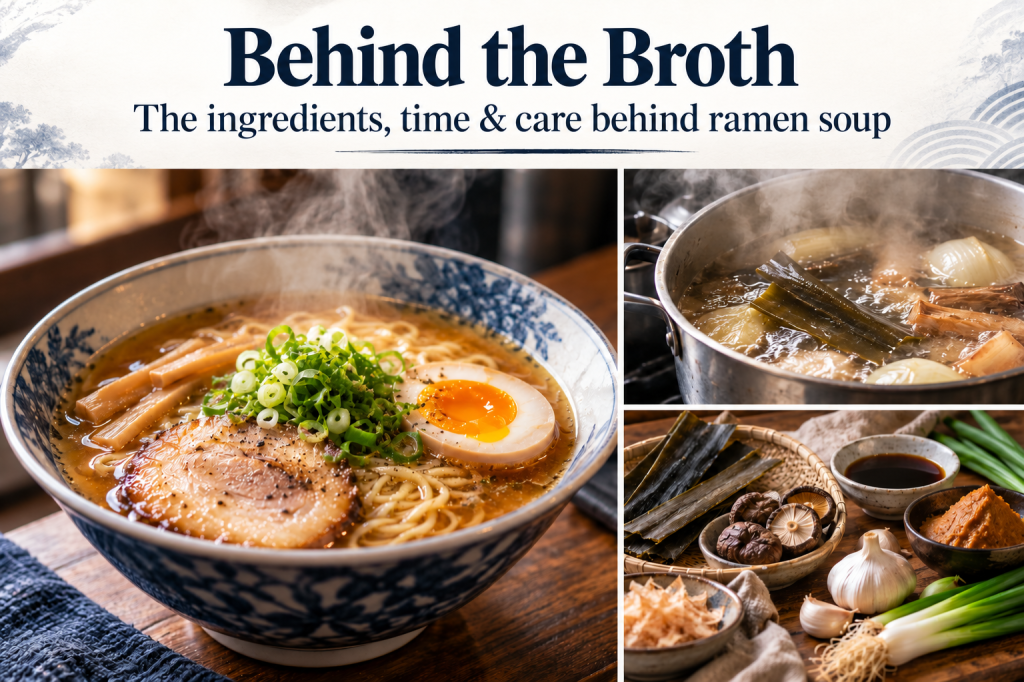
A bowl of ramen arrives, steam rising from the soup, and suddenly the first thing you want is a spoonful. Before the noodles, before the toppings, you want to know what that broth tastes like.
But what actually makes it so delicious?
In Japan, you often hear that soup is the heart of ramen. Noodles matter too, of course, but the soup brings the bowl together. And although your meal might arrive in just a few minutes, preparing its broth can take much longer.
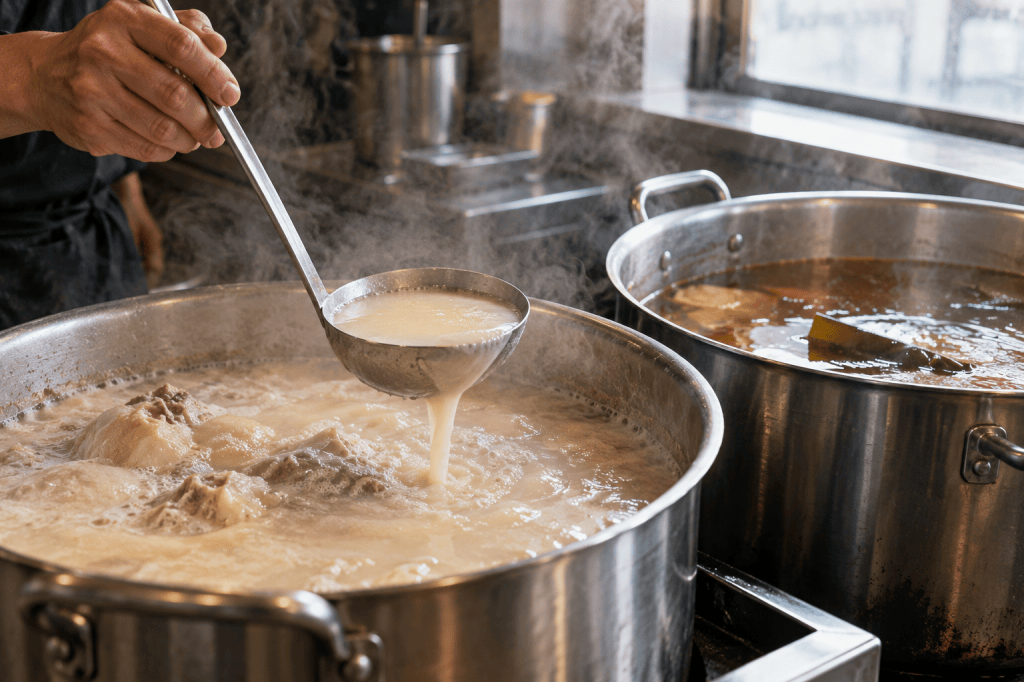
Cooking method helps create the difference between clear and cloudy ramen broth.
What Goes into Ramen Soup?
Many ramen shops build their soup from three parts: stock, a concentrated seasoning called tare, and aromatic oil.
The stock provides the foundation. Tare adds saltiness and flavor, while the oil contributes fragrance and richness. That is why two bowls made with similar stock can still taste quite different.
Pork Bones
Pork bones are the base of tonkotsu broth. Cooking draws out flavor and gelatin, while vigorous boiling can disperse fat and other components through the liquid, creating its familiar cloudy appearance.
That creamy look does not necessarily come from milk or cream.
Chicken
Chicken bones and meat can make a clear, delicate stock or a cloudy, richer one. The ingredients and cooking method help determine the result.
A creamy chicken broth is often called tori paitan. A clear broth belongs to the chintan style.
Seafood
Dried sardines, called niboshi, and bonito flakes, called katsuobushi, can contribute a savory seafood character. Some shops use seafood stock on its own; others blend it with chicken or pork stock.
This is also why a bowl without visible meat is not automatically vegetarian.
Kombu, Mushrooms and Vegetables
Kombu, a type of kelp, dried shiitake mushrooms, and vegetables can contribute depth to a stock. They can form a plant-based foundation, but may also be used alongside animal ingredients.
The recipe matters more than the appearance of the soup.
Shoyu, Shio, Miso and Tonkotsu: What Is the Difference?
These names do not all describe the same part of the soup.
Shoyu means soy sauce, shio means salt, and miso is fermented soybean paste. They describe the main seasoning style.
Tonkotsu means pork-bone broth: it describes the stock.
So shoyu ramen can contain chicken, pork or seafood stock. And a pork-bone broth can also be seasoned with soy sauce. Thinking about stock and seasoning separately makes menus much easier to understand.
Why Does Ramen Broth Take So Much Time?
A broth made from scratch needs time to extract flavor from its ingredients. Bone-based stocks may cook for many hours, and some restaurants have additional resting or maturation stages.
For one specific example, IPPUDO’s Australian menu describes an 18-hour cooking process followed by another day of lower-heat maturation. That is its stated method, rather than a rule for every ramen shop.
Longer is not always better, either. A delicate clear stock and a rich pork-bone broth need different treatment. The goal is the flavor and texture the cook wants to achieve.
How Is Ramen Soup Made?
Here is the basic process, rather than a complete recipe.
First, prepare the stock ingredients. Depending on the recipe, this may involve cleaning bones, preparing vegetables or soaking dried ingredients.
Next, cook or steep the stock. A gentle simmer can help preserve clarity, while vigorous boiling is often used for cloudy paitan broth. Ingredients do not necessarily all go into the pot at the same time.
Then, strain the stock and prepare the seasoning. Tare is often made separately so the final flavor can be controlled.
Finally, assemble the bowl. Combine hot stock, measured seasoning and aromatic oil, then add the cooked noodles and toppings.
There are plenty of variations, but this explains why the finished soup is more than a pot of stock.
Want to Make Ramen During Your Japan Trip?
If learning about the soup has made you curious about the kitchen, a ramen-making experience is another way to enjoy Japanese food.
KKday lists a Tokyo experience combining Jiro-style ramen making with an Akihabara tour. The class introduces noodles made from flour, garlic-infused soup and chashu pork, followed by a chance to enjoy the ramen you have prepared. English is listed among the available languages.
This experience includes meat ingredients. If you need a vegetarian or vegan option, confirm suitability with the provider before booking.
Check available dates on KKday →
Can You Find Vegan or Vegetarian Ramen in Japan?
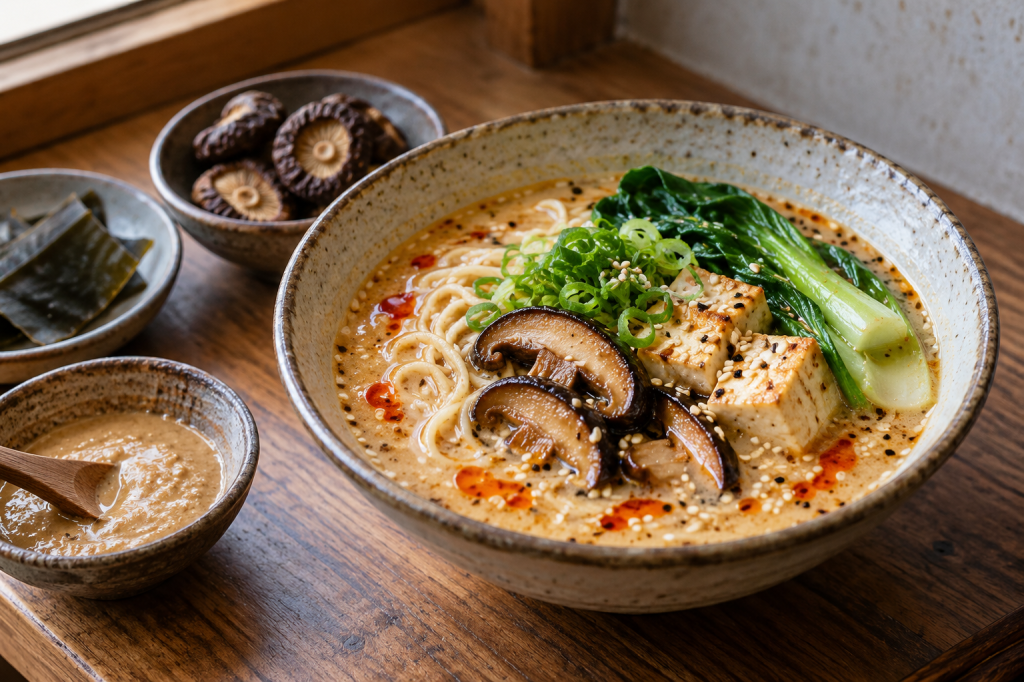
Plant-based ramen can combine mushrooms, kombu, sesame and vegetables for a satisfying bowl.
Yes! Plant-based ramen exists, including rich, creamy styles.
Kombu, mushrooms and vegetables can provide the stock, while ingredients such as sesame paste or soy milk can add body. Soy sauce, miso and plant-based aromatic oils offer other ways to build flavor.
T’s Tantan is one example of a vegan ramen specialist in Japan. Its official website says it uses no meat, seafood, dairy or eggs. Check its current store information when planning your visit.
Official website and locations
However, a menu description such as “vegetable ramen” does not guarantee a vegetarian or vegan bowl. Vegetables may sit on top of chicken or pork stock, and seafood dashi can be present even when no fish is visible.
Removing the pork topping does not change what is already in the soup.
What Should You Check Before Ordering?
Ask about the stock, seasoning, oil, noodles and toppings.
For a vegetarian bowl, confirm that it contains no meat or fish ingredients, including seafood dashi and animal fat. For a vegan bowl, also check for eggs and dairy.
You can show staff this question:
Does this ramen contain meat, fish, seafood stock, animal fat, eggs or dairy?
A clearly labeled vegan option or specialist restaurant is often an easier starting point than requesting changes to a standard bowl.
Enjoy Ramen at Home, Without Making Stock from Scratch
You do not need to spend hours preparing stock every time you fancy a bowl of ramen. Packaged noodles with soup seasoning offer a convenient alternative.
The following Nissin RAOH options use non-fried noodles. They are instant ramen products, so their soup packets are different from the freshly prepared stocks discussed above.
Nissin RAOH Tonkotsu
Choose this option if you want to explore a tonkotsu-style flavor at home. Follow the packet instructions, then add toppings such as spring onions, mushrooms or a cooked egg if they suit your diet.
Check current price on Amazon →
Nissin RAOH Soy Sauce
This soy-sauce-flavored option provides another way to explore ramen seasoning. It is a convenient starting point for a bowl you can customize with your own toppings.
Check current price on Amazon →
These two products are not vegan options: the manufacturer’s US labels list milk and egg among their allergens. Check the package you receive for its current ingredients and preparation instructions.
Try a Spoonful Before the Noodles
Next time your ramen arrives, taste the soup first.
Is it clear or creamy? Can you notice soy sauce, miso, seafood or garlic? You do not need to identify every ingredient to enjoy it, but knowing what might be in the bowl makes that first spoonful even more interesting.
Save this guide for your Japan trip, especially if you want to explore different ramen styles or find a plant-based option.


Leave a comment